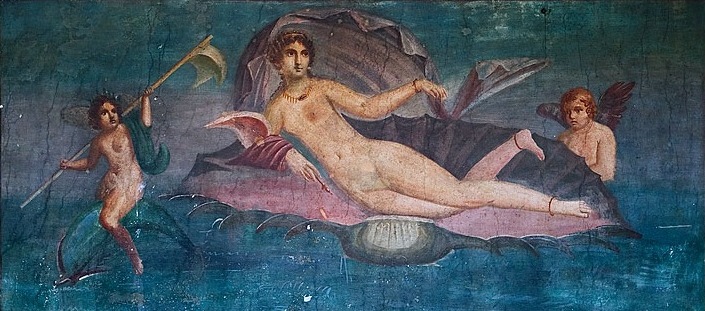
Above painting: Louis Jean Francois - Mars and Venus an Allegory of Peace

Pages

***All photos accompanying posts are either owned by the author of said post or are in the public domain -- NOT the property of History Undressed. If you'd like to obtain permission to use a picture from a post, please contact the author of the post.***

Tuesday, December 11, 2012

A Health Unto Her Majesty: The Allure Of The Victorian Age by Pamela Sherwood

Today I'd like to welcome Pamela Sherwood to History Undressed! She's talking to us today about the Victoria Age--a time I find so incredibly fascinating. Also, leave a comment for your chance to win a copy of her new release, Waltz With a Stranger!!!


A Health Unto Her Majesty: The Allure Of The Victorian Age


by Pamela Sherwood


Hello, everyone, and thank you to Eliza for hosting me at History Undressed!

Queen Victoria, for whom
the era was named.
Today, I’ve been asked to explain what I find so fascinating about the Victorian Era. Well, initially, there was no fascination--at least, not that I recognized. Like many historical romance authors, I came to the genre through the Regencies of Georgette Heyer and her successors. Naturally, I expected that if I ever tried my hand at writing a romance, it would be set in the Regency: elegant, polished, witty but dramatic, a fusion of Jane Austen and Sir Walter Scott.

Being seduced by the Victorian Age was the last thing I expected. Not that I disdained it--my graduate work focused on Victorian poetry, after all--but surely I’d said all I intended to say about the era in my thesis, right?

Flash forward several years--never mind how many!--and I find I do have more to say about the Victorian Age, after all.
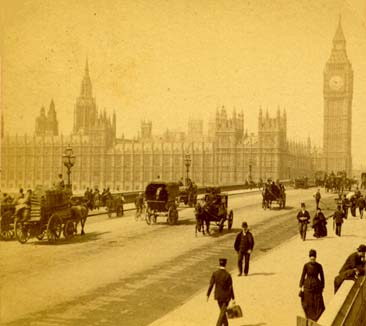
By historical standards, the Regency is an eyeblink, lasting less than a full decade, from 1811 to 1820. By contrast, the Victorian period spans 64 years, Years of sweeping, dramatic, transformative change. Years in which a sheltered eighteen-year-old princess, who had reportedly said “I will be good” when informed she would one day rule England, grew by turns into a stately royal wife and mother of a dynasty, and then the sad, but still formidable Widow of Windsor, reigning over a vast, far-flung empire upon which the sun famously never set.

Choose any decade in Victoria’s reign, and you’ll find something happening: socially, economically, politically, technologically, even artistically. The Victorians might be considered uptight, repressed, overly earnest, occasionally hypocritical, and much less dashing than their Regency predecessors, but they knew how to get things done. A series of reforms ameliorated the lot of the poor, slavery within the empire was finally abolished, a police system was established--and the British police force is still considered by many to be the best in the world. Meanwhile, new inventions--the railroad, the telephone, electric lighting--brought people infinitely closer to the world we know today.
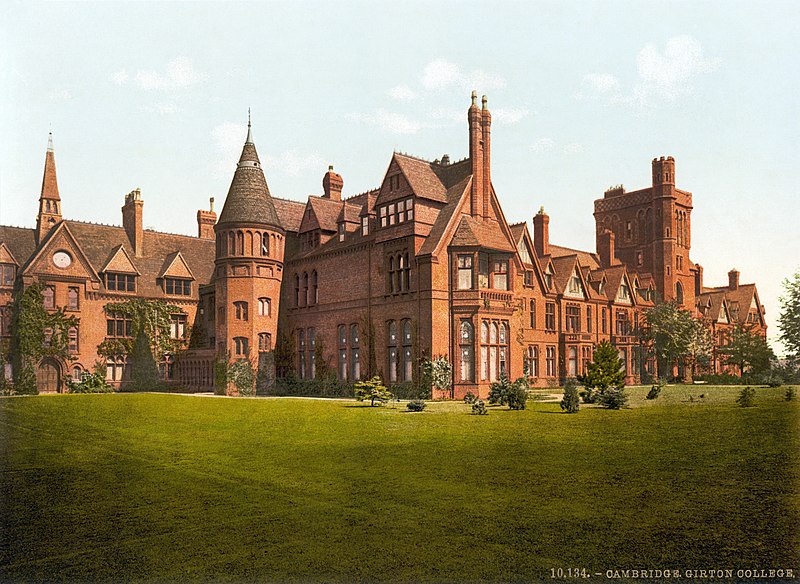
Girton College
The vexed “Woman Question” was also being addressed.  In 1857 divorce became the provenance of the civil rather than the ecclesiastical courts, making it slightly easier for unhappily married couples to dissolve their union. Laws were changed so married women could acquire and retain rights to property. In 1869, Cambridge University established Girton College, just for women students. Ten years later, Oxford followed suit by founding Lady Margaret Hall and Somerville. Degrees were still an unrealized dream until the 1920s, but women did have the opportunity to study at Oxford or Cambridge. Towards the end of the century, women who could claim some education and training were finding jobs outside the home, the schools, or the shops, working as secretaries, telephone operators, and even journalists. And the seeds for women’s suffrage were sown as well, germinating into full-blown rebellion in the Edwardian Age.

Another dramatic change was occurring on the domestic front, as the “Buccaneers” successfully infiltrated the hidebound English aristocracy, revitalizing it with new blood, new vigor, and new money. Dynamic, determined, wealthy beyond dreams of avarice, American heiresses crossed the Atlantic in droves between 1870 and 1910, intent on securing the best husbands money could buy. “Best” being a somewhat subjective term, most often synonymous with “titled,” and many land-rich but cash-poor European peers were more than willing to be bought.

Several “Buccaneers” found only disillusionment and disappointment in these transatlantic matches. Others found purpose, fulfillment, and after some initial struggle, a love to last a lifetime, as what began as a marriage of convenience developed into a union of shared interests and mutual affection.

In my debut novel, Waltz with a Stranger, twin American heiresses Amy and Aurelia Newbold have made the pilgrimage from New York to London.  Dazzling, ambitious Amy has set her sights high: nothing less than a peer will do. By contrast, Aurelia hopes only to escape notice. Jilted by her first love after a riding accident left her lamed and scarred, she believes herself to be unmarriageable--and undesirable.
           
Until one chance encounter, one moonlit waltz, changes her life forever...

Monday, December 10, 2012

Tudor Magic by Frances Burke

Today I'd like to welcome guest author, Frances Burke, to History Undressed! She and I share a love of the Tudors! And she's here today to talk a bit about the 'Tudor Age'. I'm looking forward to reading her book, Enchantress. Enjoy!


TUDOR MAGIC

by Frances Burke
At the beginning of the so-called ‘Tudor Age’ with Henry VII’s seizure of the throne, England was still very much a medieval society, with glimmerings of the Italian Renaissance on the horizon.
By the time Henry VIII took power many changes had taken place. For the educated class the development of printing was putting the Bible and other books in the hands of more and more people. There was great wealth in the land, thanks to the previous king’s care. Things were relatively peaceful, save for some back and forth with France.
However, towards the end of Henry’s reign, the Treasury was depleted, the country was weary of war with France and Scotland, and religion was about to take a complete right-hand turn.
The Protestant faith had put an end to clerical supremacy, and the rituals and ‘magic’ of the Catholic Church, which had so ordered people’s thinking, both comforting and terrorizing them, had been taken away. There was a huge gap in the still medieval-oriented lives of the common folk, and to fill this they turned with increasing enthusiasm to their traditional belief in magic, witches and fiends.
According to the historian, Nigel Heard, ‘In popular imagination, alongside the real world of everyday life there existed a spirit world inhabited by ghosts, fairies, vampires and devils.’ It was very important to guard against the supernatural, and every community had its magicians and ‘cunning’ man or woman who could be consulted about the future, heal the sick, and generally use special powers to protect the neighbours.
There were witches, too, who supposedly could kill with just a glance, and were known to indulge in sexual excess – despite the fact that they were most often poor and elderly women. They were not, however, linked with the idea of diabolical practices, as were witches on the Continent. This only came about in England during the 17thC. Toward the end of Elizabeth’s reign there was a huge upsurge in the number of witches and sorcerers which led to several statutes against ‘Conjurations, Inchantments and Witchcraft’. Books were published dealing with the phenomenon, and it was clear that witchcraft was intellectually accepted and discussed by all classes.
Another quite superior category of occultists existed, the alchemists – who took it for granted that ‘magic’ really worked and that it was possible to make contact with and control angels and demons. Some, like Doctor John Dee, Elizabeth’s own magician, were renowned scholars, although many were less reputable. Almost all were in the business of transmuting base metal into gold and discovering the Philosopher’s Stone, a mysterious object that would turn men into gods (although they didn’t put it in so many words).  They studied geomancy, or fortune-telling through the earth, astrology and the Kabbalah, and some even tried to create life without the aid of a woman – ‘the ultimate proof of man’s divinity’, according to Paracelsus, a celebrated physician/alchemist of the time.
These men were the forefathers of today’s science, and they left behind them valuable manuscripts related to their experiments and discoveries. It’s unfortunate that so much of the written work was kept deliberately obscure. However, today’s investigators with open minds are inclined to think that there was much to be gained from these ancient writings – especially with regard to the study of the occult, spiritualism and a belief in life-after-death.
Doctor Cosmo Meniscus, the alchemist in my novel ENCHANTRESS, was initially an explorer of the unknown who had dedicated his life to the science of that Age. It was his misfortune to discover in an innocent young woman a magical faculty that he craved. The manipulation of that gift brought terrible danger and, in the end, an extraordinary revelation of what ‘magic’ might be.


ENCHANTRESS is a tale of passion and intrigue set against a backdrop of brilliant pageantry and political and religious conspiracy.

Peregrine Woodward, an insignificant relative attached to Anne Boleyn’s entourage at King Henry VIII’s Court, is thrown into violent conflict with the powerful and ambitious men and women of the times. Her healing and prophetic gifts are particularly dangerous and confronting. They are coveted by the fascinating alchemist, Doctor Cosmo Meniscus, who almost destroys her in his attempt to control her destiny; while Richard de Burgh, the man she loves, will betray her innocence, before succumbing to her enchantment. 

Peregrine’s own increasing ability to alter people’s destiny is her challenge. But the bond with Richard throughout their turbulent relationship becomes her greatest strength.
From the Author....I write in my home study in a leafy area of Sydney, but love to travel to exotic settings for my novels. I’ve explored the Forbidden City of Peking, walked on the highest peaks and glaciers of Alaska, and ridden a camel in the desert footsteps of Lawrence of Arabia. I love an English country manor house as much as an ancient French castle, or the echoing corridors of Australia’s first hospital built by criminals and financed by rum. The ghosts are everywhere.

The past is endlessly fascinating, and I bring it alive, peopling it with men and women who are hardy and adventurous, and willing to travel beyond the boundaries of polite society.
Endless Time, my first paranormal, was a prize-winner with Random House, and since then I’ve published five more romantic historicals, each with a different background and time frame. I’ve followed different paths with the regency novella and a contemporary crime novel which somehow managed to involve itself in history. I’ve struggled with characters who deliberately wandered from their place in the storyline, and had to dismiss some who simply would not fit in. My library shelves groan with the weight of research material, rarely dusted, I admit. Life is too busy, too packed with things to know, places to go, characters to create, stories to weave.

I write about adventure, the unexplained, murder, war and love. I write because I must. 

Visit Frances at her Website, Facebook 

Friday, December 7, 2012

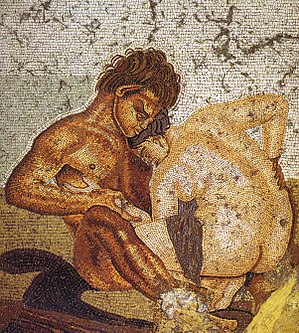
Sexuality in Art from Ancient Rome

Given last week's "scandalous" discovery of the Giant Penis, I've decided to give you something else equally naughty. Today I give you ancient Roman erotic art... Often naughty, sometimes comical. The Ancient Romans were not abashed by sexuality. They embraced it. Put it up on their walls, wore it around their necks. Sex was out there, in your face.

Enjoy!

Satyr and nymph, mythological symbols of sexuality on a mosaic from a bedroom in Pompeii

Southern wall of room 43 (Cubiculum) in the Casa del Centenario (IX 8,3) in Pompeii,
1st Century. Fresco of couple in bed.
Fresco from Pompei, Casa di Venus, 1st century AD. Dug out in 1960. 
It is supposed that this fresco could be the Roman copy of famous portrait of Campaspe, 
mistress of Alexander the Great

Fresco of Priapus, Casa dei Vettii, Pompeii. Depicted weighing his enormous erect penis against a bag of gold.

Erotic Scene from the eastern side of the southern wall of the Lupanar. Roman fresco in Pompeii.

Tuesday, December 4, 2012

Video of the Week: Horrible Histories -- Georgian Court Toilets

OMG, this is too hilarious!!!!  Another weekly video from Horrible Histories on Georgian court toilets :)


Monday, December 3, 2012

Highland Rake with a Ghostly Twist by Terry Spear

Welcome back to History Undressed, guest author, Terry Spear! She's got a new release, HIGHLAND RAKE, with a new twist and she's sharing her ghostly travels to Scotland! The pic to the left is Terry Dunnottar Castle in Scotland. Enjoy!


Highland Rake with a Ghostly Twist

FromRavenswood House in Ballater, Aberdeenshire where a seafaring ghost, trader in alcohol and tea, resides…to ghostsat various inns all over Scotland…to a BBCspecial about how highly populated Scotland is with ghosties…to castles that house ghosts…

Dunnottar Castle 

and Brodie Castle

I was fascinated with the idea of incorporating one…or a few…in my current book release.
In one castle we visited, it was said that a young lady was taken in by the laird, but when she was found pregnant, and unwed, she vanished. Now her ghost haunts the castle.

We didn’t see any evidence of hauntings while we visited the seven castles in Scotland, but when we stopped to take pictures of the Highland cows in a pasture, trees shading them, no farmhouse nearby, a river beyond the field, tall hills behind us, no buildings or people anywhere about, I heard the most beautiful instrumental Celtic music. I felt carried away to a movie scene, the grass bright green, the air chilly on that October day, the red long-haired cows munching on grass, and the Celtic music playing in the background.
When I reached the fence to get as close as I could to take pictures of the cows, the music stopped. I took several pictures, then joined my lady friends, one being Vonda Sinclair, another Highland romance writer, and said, “Did you hear the music? Wasn’t it beautiful?”
Highland Cow

I knew they’d say yes. I mean, who wouldn’t who loved all things Scottish?

Neither heard any music. I couldn’t believe it. It was real, just beyond the tall lonely hills where not a soul lived or stirred.

So when I wrote Highland Rake, third book in The Highlanders series, I wanted the heroine to be able to commune with ghosts. She has a pesky ghostly brother, and the hero’s spirited sister that tangles with Alana’s brother. The story is filled with mystery—why her brother had died, who had murdered her father and his men—and both the living and the dead help to provide clues in this Highland Medieval romance.

Even in my Highland wolf series, starting with Heart of the Highland Wolf, the MacNeills have a ghostly cousin who lives at Argent Castle. I just couldn’t write the werewolf tale, without having a resident ghost! In A Howl for a Highlander, and A Highland Werewolf Wedding, both coming in 2013, the MacNeill ghost has his part. The Castle Dunnottar inspired me to write: A Highland Werewolf Wedding though. The Medieval castle overlooks the northeast coast of Scotland in Kincardineshire and was extremely cold that day. But when we were in the inner bailey, surrounded by thick walls, I felt almost warm. I didn’t feel anything evil—just at home there. And so because of that I used the castle ruins in the story.

Several roads in Scotland have ghostly sightings also. Drivers have thought they’ve hit a person, only to discover there is no one there. One of the days we traveled, the fog was so thick, it was hard to see much of anything. I could imagine a ghost blending in with the mist.

Scotland just seems the perfect place for spirits to thrive.

Having had a love of all things ghostly since I was a child, but never having experienced such a thing back then, I always felt the ghost stories fun-filled fantasy. I later encountered ghostly apparitions. One was in the Palo Duro Canyon, Texas, where Indian ponies raced across the cliffs, and as I was curled up in a sleeping bag alongside my fellow Army ROTC cadets, I believed we would be trampled to death. Except the ponies were already dead—corralled by the US Cavalry and herded off the cliff’s edge to prevent the Indian tribes that had gathered to fight from remounting their ponies and fighting again.

I didn’t believe that I had had a ghostly experience then. I never do. It happened. I heard them, their hooves pounding the ground, their neighing and whinnying, and snorts. The only thing I realized I didn’t sense was the vibration through the ground that I would have felt as they stampeded toward us. They moved away and faded into the night. And no one but me had heard them.

Yet, when I went to write about the real ponies years later, and was doing research about them, for years believing they were wild mustangs, I discovered many over the years had heard the ghostly horses.

I’ve had other experiences too, only in one, my son, daughter, and mother witnessed it too. You know, it’s really great when others have seen or heard the same thing you have!

So what about you? Ready to witness ghosts in Scotland? Or have you already? Or somewhere else that you’ve been?


Dougald MacNeill takes Lady Alana Cameron to his laird brother James's Craigly Castle when he finds her roaming the heather on the MacNeill lands. But who has sent her there and why? Her uncle, laird of the Cameron clan, and warring with the MacNeill for years, has made a marriage arrangement with another clan and now that is even at stake.

Having witnessed her father's death, and even believing he had returned her home when all along he had been dead, Alana discovers she has the gift, or curse, of seeing the newly departed and sometimes those who should have long ago passed over. Her own deceased brother continues to plague her, the rake, and now another, who is very much of the flesh, Dougald MacNeill, has her thinking marrying a rake might just have its benefits. Dougald's sister, who is one fiesty ghost, has offered to help Alana keep Dougald in line if he thinks of even straying.

But who sent Alana on a fool's errand in the first place to remove her from the Cameron's lands and set her squarely in Dougald's care, and who really killed her father and her brother, and what has it all to do with Alana? Will she and Dougald learn the truth before it is too late?


Terry
"Giving new meaning to the term alpha male where fantasy IS reality."

About the Author
USA Today bestselling and an award-winning author of urban fantasy and medieval romantic suspense, Terry Spear also writes true stories for adult and young adult audiences. She’s a retired lieutenant colonel in the U.S. Army Reserves and has an MBA from Monmouth University. She also creates award-winning teddy bears, Wilde & Woolly Bears, that are personalized that have found homes all over the world. When she’s not writing or making bears, she’s teaching online writing courses or gardening. Her family has roots in the Highlands of Scotland where her love of all things Scottish came into being. Originally from California, she’s lived in eight states and now resides in the heart of Texas. She is the author of the Heart of the Wolf series and the Heart of the Jaguar series, plus numerous other paranormal romance and historical romance novels. For more information, please visit www.terryspear.com, or follow her on Twitter, @TerrySpear. She is also on Facebook at http://www.facebook.com/terry.spear .


Saturday, December 1, 2012

Christmas on the Home Front in 1939 by Fenella Miller

Today I'd like to welcome guest author, Fenella Miller, to History Undressed! She's written a post on Christmas on the home front for us! Enjoy!


Christmas on the Home Front in 1939

by Fenella Miller


Photo by Phil Gyfford, courtesy of Flickr
1939 was the last of what could be thought of as a ‘pre-war’ Christmas. Although there were restrictions and the blackout was in place civilians were determined to celebrate.  An advert that ran sums up what people felt, “As dusk falls, the fairy lights on the Christmas tree outside St Paul’s Cathedral will go out… we must await victory to again see them at night in all their colours.”

Amazingly over 4000 civilians were killed  on the roads that winter compared to 2500 the previous period in 1938. There were 155 lives lost in accidents on the road in December of 1939 –the highest recorded number of deaths.

The weather that year was very seasonal – most of the country was blanketed in snow. In fact this was the coldest winter for nearly fifty years. Families were without their sons, fathers and brothers and over half a million men were serving in France.

The government wanted the population to know what they were fighting for – celebrating as always would reinforce this message. The radio, magazines and newspapers all stressed the importance of community spirit, family values, neighbourliness, faith and tradition. They wanted families to celebrate in style. Rationing didn’t begin until January so there was no shortage of the traditional Christmas fare. No doubt many remembered the shortages experienced in WW1 and were already hording food in the expectation that things would be in short supply very soon.

Children’s toys were still available but even in 1939 suggestions were being made for ways civilians could ‘make do and mend’. Rubber toys for the bath could be made from old inner tubes or hot water bottles. These are cut with scissors and stuck together with the rubber solution used to end a puncture. They were then packed with kapok or chopped up bits of rubber or cork sawdust from fruit packing. These don’t sound especially attractive – I can’t imagine any five year old being thrilled to find a dingy grey rubber toy in their sock on Christmas morning. Card games called ‘Vacuation’ and ‘Blackout’ were also popular. My husband remembers being delighted to have an orange, nuts, a sugar mouse and a couple of wooden farm animals in his sock. For him, a rural working class family, presents under the tree didn’t feature.

Folk were asked to send parcels to the troops in France containing men’s magazines and darts. A personalised Christmas card was also added – the cost was only 3s 6d. Women’s Pictorial suggested families sent boiled sweets, jam, biscuits, chutney, plum cake as well as soap and razor blades.

Nothing much has changed even after almost seventy years. I was sending parcels to out brave troops in Afghanistan last year with more or less the same things in – minus the darts and razor blades. Nothing sharp is allowed in BFPO parcels.

Christmas day radio broadcast would have been an important part of the festivities – although church would have come first. Her is small selection of what would have been listend to:

7.00: Christmas Greetings – a sackful of stories, verses and records.
7.40: The Reginald King Trio
8.15: Christmas Carols
10.00: A Nativity play by Bernard Walker ‘Bethlehem’
1.10: An Orchestral Concert conducted by Guy Warrack.
2.15: The Empire’s Greeting.  (This involved messages form navy vessels, an airborne RAF aircraft, a Welsh miners’ choir, a shipyard worker’s house in Northern Ireland and many other similar things
3.00 The King’s Speech ).

I doubt anyone stands to attention when the Queen addresses the nation nowadays.

Hope you enjoyed this brief glimpse into Christmas in 1939.
Fenella J Miller


As war rages over Europe, Barbara Sinclair is desperate to escape from her unhappy home which is a target of the German Luftwaffe. Caught up by the emotion of the moment she agrees to marry John, her childhood friend, who is leaving to join the RAF, but a meeting with Simon Farley, the son of a local industrialist, and an encounter with Alex Everton, a Spitfire pilot, complicate matters. With rationing, bombing and the constant threat of death all around her, Barbara must unravel the complexities of her home life and the difficulties of her emotional relationships in this gripping coming-of-age wartime drama.


World War II brings divided loyalties and tough decisions in this page turning drama from Fenella Miller.

Hannah Austen-Bagshaw’s privileged background can’t stop her falling in love with working-class pilot, Jack, but Hannah has a secret. Torn between her duty and her humanity, she is sheltering a young German pilot knowing she risks being arrested as a traitor. Hannah’s worst fears are realised when Jack finds out what she has done and their love begins to unravel.

Will her betrayal be too much for Jack to forgive?

Thursday, November 29, 2012

Cerne Abbas Giant...aka The Giant Penis Man

Nestled in the hills of Dorset England is a ginormous man--and penis.

The other night the DH and I were surfing through popular shows on Hulu, when we came across Kim Cattrell's Sexual Intelligence. Never one to pass up on an opportunity to learn about the human body, I selected it (alas, I did not finish it...got too tired). I was pleasantly surprised when she stood on the 8-foot-long phallus of this giant--how in all of mankind had I missed this??? Have you heard of it?

It is a monument in England, seriously!!

According to the National Trust site, the figure is believed to be Hercules carrying a club...and wearing one too it seems, lol.

He is 180 feet tall. The outline is trimmed and chalked. Local folklore places the giant as an ancient figure. You can see in the picture, that there is an earthen square above his club. This is the Trendle, dated from the Iron Age, so who knows when the man sporting an enormous erection showed up. Could have been the Iron Age, or the ancient Romans who had no problems baring all, could have been a prank some couple hundred years ago from which rumor turned to folklore and we're staring at the penis drawn by some drunken dandies one night. No one knows for sure.

The fact of the matter is--in Dorset England, there is a huge chalk figure with a thoroughly engorged penis, and I have just added it to my list of things I must see!

If you care to visit the site, here's a link.