Above painting: Louis Jean Francois - Mars and Venus an Allegory of Peace

Pages

***All photos accompanying posts are either owned by the author of said post or are in the public domain -- NOT the property of History Undressed. If you'd like to obtain permission to use a picture from a post, please contact the author of the post.***

Monday, November 7, 2011

Guest Blogger Christina Courtenay on Men in Kilts

Today I'd like to welcome Christina Courtenay to History Undressed! She's written an article today that is near and dear to many hearts :) -- Men in Kilts!


Men in Kilts
by Christina Courtenay

What is it about men in kilts that fascinates romance readers so? I’m not sure, but I have to confess I’m one of the fans of this genre. I’ve loved romance stories set in Scotland since I first discovered there was such a thing, and whether they have a bare-chested hero in a kilt on the cover or not, I can’t get enough of them. I was therefore really keen to write a novel set in the Highlands myself. Imagine my chagrin then, when I found that my hero couldn’t wear a kilt at all!


My story, Highland Storms, is set in 1754, eight years after the battle of Culloden, which as we all know, the Jacobites lost. As a consequence of the failed rebellion, the victorious English tried to virtually eradicate all Highland culture and this included their clothing. The New Disarming Act of 12th August 1746 banned them from wearing any type of Highland dress (as well as possessing weapons) and this meant no tartan/plaids of any kind and no kilts. This didn’t stop me doing some research into Highland dress, however, and I was surprised to find that what we now refer to as kilts are very different to what most of the men wore before the Jacobite uprising. I thought I’d share some of my findings with you.
The kilts in those days were not the tiny versions we have now, although something similar did exist – they were called feileadh beag (little wrap or Philabeg in English). However, most Highlanders wore the old type of kilt, usually called a “great wrap”, “tartan wrap” or“belted plaid” back then. They were a much larger and rougher version and wouldn’t have looked as neat and tidy as the ready-made ones available to us.

A plaid by itself could be just a length of woollen fabric worn over the body like a mantle, but a “belted plaid” was different. It was made of a piece of material from about three to five yards long and two loom breadths wide, which equals around 50 inches. This was set in folds and fastened around the waist to make a sort of skirt that reached half way down the thigh. The rest was brought over the shoulders and fastened at the front, below the neck, usually with a bodkin, pin or sharp piece of stick. It could also be brought up over the head to protect the wearer during bad weather. It was a wonderful outfit for any soldier (especially the guerilla type, sleeping rough in the mountains) or anyone else travelling through the Highlands, as it served as bedding by night and clothes in the day time.
Made of wool, it must have smelled pretty bad (as did a lot of things in those days!) – the Englishman Edmund Burt, who lived in the Highlands for a while during the early 18th century, reported to a friend that “… one thing I should have told you [which] was intolerable … the number of Highlanders that attended at table, whose feet and linen, or woolen, I don’t know which, were more than a match for the odour of the dishes.” Of course, if you make wool wet, it smells more than usual (anyone who has a dog will know what I mean). However, wetting it also has a benefit in that the moisture makes the wool thicker and thereby keeps you warmer. In contact with body heat, it makes a sort of steam, which meant Highlanders could even sleep in snow if they had to and still stay fairly warm. And Highlanders, from what I understand, were used to being wet – it didn’t bother them.

These plaids or tartans could be of many colors, but for warfare the Highlanders seem to have favored plainer ones, mostly brown. That way, they were camouflaged when they lay down in the heather and this apparently annoyed the English no end! In fact, the belted plaid was the garment the English objected to the most because they said it was ‘… calculated for the encouragement of an idle life in lying about upon the heather in the daytime instead of following some lawful employment … [it] serves to cover them in the night when they lie in wait among the mountains to commit robberies, composed of such colours as ... nearly resemble the heath on which they lie so you don’t see them until you’re very close, [and it] renders them ready at a moment’s notice to join in any rebellion’. Well, it seems very sensible to me so why wouldn’t they have worn it?

Natural dyes, like those made from nettles, lichen, leaves, heather and roots etc, were used for the wool. Only rich people imported dye like red or blue and it’s amazing the range of colors you can get by just using what nature provides. One of my aunts has experimented with colors made of different types of moss, for example, and although they are muted, they’re still very pretty.

The belted plaid was most convenient for those travelling in the mountains, as wearing breeches would not have given them the same freedom of movement. And apparently they really didn’t wear anything underneath their belted plaid except a shirt - Mr Burt also reports to his friend that an Englishwoman he knew had been offended by the sight before her when a Highland guide climbed a hill ahead of her!

The “little wrap” evolved when the men needed a less cumbersome garment. It consisted of only one width of material, pleated and belted round the waist, without the extra bit that was flung over the shoulders. This was preferable for certain occupations where the large belted plaid would just have been in the way.

Women didn’t wear belted plaids, of course, but they did have a very similar garment – the arisaid. This was more like a blanket or mantle used to keep them warm and dry in cold or wet weather. They put it on by pleating about two thirds of it round the waist and fixing it in place with a belt, leaving a gap at the front. The left-over piece, you pulled up behind you and round the shoulders, fastening it with a crude pin. Just like the belted plaid, it could be pulled up over the head. The arisaidswere often chequered before the Jacobite uprising, but afterwards, when they were still allowed, they were mostly plain, sometimes with a stripe at the edge. They sound very useful, especially in a place like the Highlands which is so often wet and cold!


Many thanks for having me as your guest, Eliza!


(Quote from “Burt’s Letters from the North of Scotland”, ISBN 978-1-874744-90-0)

Highland Storms
Who can you trust?
Betrayed by his brother and his childhood love, Brice Kinross needs a fresh start. So he welcomes the opportunity to leave Sweden for the Scottish Highlands to take over the family estate.

But there’s trouble afoot at Rosyth in 1754 and Brice finds himself unwelcome. The estate is in ruin and money is disappearing. He discovers an ally in Marsaili Buchanan, the beautiful redheaded housekeeper, but can he trust her?

Marsaili is determined to build a good life. She works hard at being housekeeper and harder still at avoiding men who want to take advantage of her. But she’s irresistibly drawn to the new clan chief, even though he’s made it plain he doesn’t want to be shackled to anyone.
And the young laird has more than romance on his mind. His investigations are stirring up an enemy. Someone who will stop at nothing to get what he wants – including Marsaili – even if that means destroying Brice’s life forever …
Highland Storms, ISBN: 978-1-906931-71-1, published by Choc Lit 1st November 2011, available now from Amazon


Christina Courtenay lives in London, UK, and is married with two children. Although born in England she has a Swedish mother and was brought up in Sweden. In her teens, the family moved to Japan where she had the opportunity to travel extensively in the Far East.
Christina is Vice Chairman of the UK's Romantic Novelists’ Association. She won the Elizabeth Goudge Trophy for a historical short story in 2001 and the Katie Fforde Bursary for a promising new writer in 2006. Highland Storms is Christina’s third Choc Lit novel. Her debut, Trade Winds and prequel to Highland Storms, was short listed for the Romantic Novelists’ Association’s Pure Passion Award of Best Historical Fiction 2011. Her second novel, The Scarlet Kimono won Best Historical Fiction price for the Big Red Read and was shortlisted for the inaugural Festival of Romance Readers Award for Best Historical Read 2011.
As well as her novels, Christina has published four Regency novellas.
Follow Christina on Facebook and Twitter www.twitter.com/PiaCCourtenay

Friday, November 4, 2011

SCOTLAND’S EARTHQUAKE HISTORY by Nancy Lee Badger

Welcome back to History Undressed, guest author, Nancy Lee Badger!  Nancy has tantalized us so many times in the past with articles on dragons, ales and Scots, and she's back again to entertain us some more with her article today!

SCOTLAND’S EARTHQUAKE HISTORY
by Nancy Lee Badger
Earthquakes across the world have been in the news lately. From the recent devastation in Turkey, to the underwater quake and its accompanying tsunami that caused thousands of deaths in Japan, when the earth moves, we listen. Even here in North Carolina, I felt the house shake when an earthquake hit near Washington, DC just this past August. What about another location where we rarely hear about experiencing tremblers: Scotland. Yes, Scotland has earthquakes but unless you live there, you probably do not hear talk of them on the news. Why, then, are earthquakes found in my latest romantic fantasy, DRAGON IN THE MIST?

When I write a story—any story—I research the location. To me, location is also a character, and as important as my hero or heroine. Where a story takes place is quintessential to my plot, so my readers can feel they are there, in the story. For DRAGON IN THE MIST, loosely based on the Loch Ness Monster, I needed a secondary reason for my hero, the American scientist Rory Hawthorn, to travel to a small town on the banks of Loch Ness. When my research gave me a glimmer of an idea, I quickly made my present-day American hero a geologist. Covertly searching for the root of a family curse, he told his family he was traveling Scotland to research its earthquake history.

Does Scotland experience quakes? I was as surprised as you to find statistics reporting several large earthquakes every century. One of Scotland’s largest quakes occurred back in 1816, so I set the beginning of my book in the past and used my heroine, Nessía—in her Loch Ness Monster from—causing the quakes by slamming her head into the loch’s underwater sheer sides. 1816 fit the timeline I wanted to show in the book’s first chapter, after which the story continues in present day.

So, what exactly causes an earthquake?  Let me start with a little information about the area that includes Loch Ness, where my book takes place. Loch Ness, south of Inverness, is 23 miles long and about 1 mile wide. Though narrow, it averages a whopping 600 feet in depth, making the loch dark, cold, and eerie. The loch is shaped like a long, deep trench and follows the line of the Great Glen Fault. The area was originally beneath a huge glacier.

Yes, Scotland’s Loch Ness has a fault similar to the large, active San Andreas fault in California. Luckily for the residents of the Highlands of Scotland, the Great Glen Fault is much less active, but it has seen activity for over 400 million years. Scientists have discovered Foyers and Strontian granite from the same intrusion now 66 miles apart. Let’s just agree the land is shifting and moving, slow but sure.
Guess where the shatter belt of rock produced by the fault movement mostly lies? Under Loch Ness! Visitors to Urquhart castle overlooking the loch might not have noticed the shattered rock evident in road cuttings. Heat and stress evidence tells local geologists that movement occurred over and over.


Let’s get back to the earthquake frequency. The Loch Ness area, where DRAGON IN THE MIST is set, averages 3 earthquakes each century that measure at least a 4.0 on the Richter Scale, the method used to describe an earthquakes ferocity. In comparison to the strengths and amounts of quakes that hit the state of California, Scotland’s rumbles are rare. Could I use such a history in my story? You bet! I twisted this history to claim that my heroine, Nessía of the Lake, caused the earthquakes while in her serpentine, underwater wingless dragon form.


Why not? In fiction, even in a romance where I have set my story and its characters in our same world, I have the freedom to change the rules a little.


What about other areas of Scotland? I found an article from August 2011 about recent Scottish earthquakes. Apparently, five earthquakes were felt in the west Highlands followed by the recording of three lesser quakes. The British Geological Survey (BGS) recorded the first and largest, of 2.9 magnitude, at Lochailort, with smaller quakes recorded between 11:13 and 18:24. The weekend's events occurred in the Lochaber Geopark. As reported by the BBC.com/UK, Park director Noel Williams said: "Most earthquakes in Lochaber occur as unweighting of the earth after the melting of the ice formed during the last glacial period some 12,000 years ago. The land effectively 'bounces back up again' a process Earth scientists term isostatic rebound."The BGS said earthquakes were a common event in the west Highlands but added that to have five on the same day was "slightly unusual".

As I mentioned earlier, earthquakes measuring over 4.0 are rare, but these smaller quakes still made the news because they were noticeable in quiet places, during a quiet time. A previous quake was reported in Knoydart on 30 July. Earthquake ‘swarms’ have also been recorded in Dumfrieshire and in parts of Perthshire. I did find another story reporting a 3.5 quake rocked the western shores of Scotland in January 2011, which included the southern end of Loch Ness. People in Inverness, at the northern end of Loch Ness, reported feeling it over 120 km away. It is safe to say Loch Ness rippled!


The islands off the western coast of Scotland were formed by volcanoes, and volcanoes breed quakes. I set my book DRAGON’S CURSE on the island of Staffa due to its odd hexagonal rock formations and huge caves. Scotland has no dormant or active volcanoes, but plenty of ‘plugs’. A plug is the remainder of the neck of a Volcano. Devil’s tower in Wyoming is a good example of an ancient volcano neck. In Scotland, ancient dwellings have been discovered on the summit of North Berwick Law, the rounded volcanic remains which sit 613 feet above sea level. It even has a ‘tail’ caused by a retreating glacier. A famous tourist attraction sits on another plug: Edinburgh Castle.

Earthquakes might be considered a minor aberration in Scotland…unless you live there! What my research taught me, is that you never know what you might find when you delve into the history behind the topography of a book’s location. Use the facts to your advantage when writing to give your readers a better perspective while they fall in love with your characters. And to my readers, I hope you fall in love with Nessia, Rory, and Scotland when you read DRAGON’S CURSE and my latest release, DRAGON IN THE MIST.

Nancy has a prize for one very special commenter! Leave a comment and be eligible for a lovely 2012 Scottish Calendar full of lovely photos and funny comments! Sure to put a smile on the face of any laddie or lassie.

BOOK BLURB

Life without love is not worth living.
Nessía of the Loch has lived beneath the murky water of Loch Ness since ancient times. The pain of loneliness manifests in anger so strong, the entire valley shakes with earthquakes. In 1816, a Faerie queen pleads for her to cease the tremors and rewards Nessía with a human form. To stay human, she must find love. When the man she believes she loves casts her aside, Nessía responds to the betrayal by cursing the men of the MacDonald clan with the inability to keep a woman’s love. Only an act of true selflessness will break the curse.

After centuries pass, Nessía again searches for love. When Rory Hawthorn, an American scientist, arrives under the pretext of researching the earthquakes but in reality to research his MacDonald heritage and the curse, she believes she has found the perfect mate.

Amid stolen kisses, another earthquake, a steamy night of passion, and a broken heart, Nessía returns to the murky depths of the loch. When Rory dives in to follow her, he meets the green, scaly Loch Ness Monster. Assuming Nessía is in danger, he is intent on killing the monster and saving the woman he loves.

EXCERPT

“Why did he call you Nessie? You obviously don’t like it. What’s your real name?” the stranger asked while his gaze bore into her chest.

Let him feast his eyes.

He sipped his ale, all cool and calm, as he waited for an answer. She pulled back both shoulders. Waiting until he glanced up, she turned away to ring up a departing customer’s bill, then added the excess to her apron pocket.

Ha! Monty gave me a ‘tip’ then left me for his wife.

“I do not share familiarities with strangers, sir.” She preferred to tug the dress’s lace edging up, but held back. The trim chafed her low neckline and upper arms, but Mac insisted his servers dress in period costume.

“For the tourists, lass,” Mac explained the day she walked in and asked for a job. She did not mind the long dress and doeskin shoes, per se. The whole idea of clothing was bothersome. She enjoyed swimming to the dark depths of the loch clad only in deep green scales.

Even now, she yearned to swim naked.

“Well, now. I can fix that.”

It took Nessía a few heartbeats to understand his comeback. Did he refer to her clothing, or to swimming naked? Only one way to find out. “Fix what, sir?”

“I’ll introduce myself, and then you tell me your name. ‘Easy as pie, and polite as rain’, my father always said.”          

Nessía froze. No, her response caught in her throat and her blood thickened into ice. Fingering the coins in her apron, she willed her talons to stay retracted while her left foot tapped the plank floor. The stranger’s sultry voice was not familiar, but the words rang true, because Monty had spoken those, centuries ago.

Nessía stepped closer to the bar. A million questions popped into her head, but she stayed silent. Let him speak first and prove he has no affiliation to that damnable clan.

“I go by Rory Hawthorn. Though I’m American, I’ve traced my ancestors to this town. I plan to be here for quite some time exploring. Learning. Studying the unusual earthquake history of the area.”

Earthquakes? What would he say if he knew I caused those tremors?

Rory Hawthorn, so called, moved closer. He leaned on the bar, and whispered as if the next words were for her ears only.

“And I very much want to know you better.”


AUTHOR BIO

Nancy loves chocolate-chip shortbread, wool plaids wrapped around the trim waist of a Scottish Highlander, the clang of dirks and broadswords, and the sound of bagpipes in the air. Nancy lives the dream. After growing up in Huntington, New York, and raising two handsome sons in New Hampshire, Nancy moved to North Carolina where she writes full-time. She and her family continue to volunteer at the New Hampshire Highland Games each fall. Nancy is a member of RWA, Heart of Carolina Romance Writers, Sisters In Crime, FF&P Romance Writers, and the Celtic Heart Romance Writers.

Check out her website www.nancyleebadger.com
and her blog www.RescuingRomance.nancyleebadger.com.
Follow her on Twitter @NLBadger
and on Facebook http://on.fb.me/scmtx5


Title: DRAGON IN THE MIST
Author: Nancy Lee Badger
Genre: Romantic Fantasy
Length: 17,000 words
Amazon: http://amzn.to/nNpfNV
Barnes & Noble:  http://bit.ly/pzEYYh
Smashwords: http://bit.ly/oKGRDY

Wednesday, November 2, 2011

Tuesday, November 1, 2011

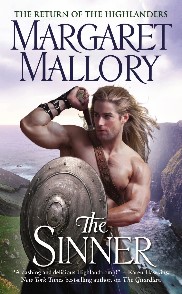
Marriage in the Highlands in the Early 1500's by Margaret Mallory

Welcome back to History Undressed, Margaret Mallory, the talented author of medieval and Scottish romance! Today she is going to tantalize us with talks of marriage! Read on, and don't forget to comment for a chance to win a copy of her new release!

Marriage in the Highlands in the Early 1500’s*
Margaret Mallory

Dunscaith, home of the Chieftain of the MacDonalds of Sleat
The most surprising thing I learned in my research for my THE RETURN OF THE HIGHLANDERS series was about the marriage practices of Highlanders in the Western Isles, particularly the chieftains, at that time my books take place. 

In the early 1500’s, these Gaelic-speaking Highlanders maintained their old Celtic customs alongside their Christian beliefs. Priests were not necessary to make a marriage, which was fortunate since priests were few and far between in the Highlands at this time. In Celtic secular marriage, it was common for couples to enter a trial marriage. At the end of a year, either party could leave the marriage. If the couple decided to stick with it, they could have their marriage blessed at the same time their first child was christened when the priest made his rounds.  Children born of these trial marriages were considered legitimate, and men generally claimed children born outside of marriage as well.  Divorce was permitted by either party on fairly loose grounds.

Chieftains, who were more than kings to their clans, disregarded edicts from Rome as freely as they ignored edits from the Crown.  For them, marriage was a means of making an alliance with another clan—and they changed alliances all the time.  Henry VIII had nothing on some of these chieftains when it came to multiple wives, though a chieftain could simply “set aside” a wife, rather than look for an excuse to have her killed.

Cawdor Castle
The chieftains did not ignore the Church rules entirely, but Rome was a long way away so they generally followed the principle that it was better to ask forgiveness than permission. Though a chieftain might seek an annulment, he was unlikely to wait the two or three years to get an answer from Rome before taking a new wife.  The petition for annulment was often based on the marriage being in violation of the rules of consanguinity, though everyone had been well aware of the issue at the time of the marriage.

As might be expected, a clan chieftain’s serial (and sometimes concurrent) marriages did not always lead to family harmony or good relations with other clans. The MacDonalds of Sleat, the clan of my fictional heroes, had their share of such conflict.

Hugh (Uisdean), the first MacDonald of Sleat and the grandfather of my fictional character Connor, was one of three sons that Alexander, the third Lord of the Isles, had by different women. Despite being admonished by the pope himself for putting away his true wife and “adhering” to Hugh’s beautiful and highborn mother, Alexander refused to part with her. His half-sons, however, got along well.

Hugh had six sons by six different women, all from prominent families. Unfortunately, his sons did not get along as well as Hugh had with his half-brothers. In fact, Hugh’s first son hated his half-brothers so much that upon his death he turned the clan’s lands over to the Crown to keep the others from inheriting them. Though later chieftains held onto the lands, their lack of legal title caused the clan problems for years. Two of Hugh’s other sons were murdered by their half-brothers, and another was murdered by Hugh’s grandsons. 

This family strife plays an important role in all four books in THE RETURN OF THE HIGHLANDERS. In THE SINNER, I also included as secondary characters two couples who were wed in order to make alliances between their respective clans—with wildly differing results.

Margaret Mallory at Eilean Donan
I drew on a well-known incident involving the Maclean chieftain, Lachlan Cattanach (Shaggy), and his wife Catherine, whose father and then brother were chieftains of the powerful Campbell clan. I won’t say here what happened, but when Shaggy was found murdered in bed on a visit to Edinburgh some years later, everyone assumed it was done by a Campbell in retribution.

Catherine’s brother John had better luck in marriage. When the Thane of Cawdor died leaving his baby daughter Muriel as his sole heir, clan chieftains all over the Highlands hoped to arrange a match that would result in one of their sons becoming the next Thane of Cawdor one day. When Muriel was still a toddler, the Campbell chieftain preempted the others by having his men snatch Muriel when she was outside the walls of Cawdor Castle taking in the fresh air with her nursemaid. Muriel was raised in the Campbell chieftain’s household and married to John as soon as she reached twelve, the age of consent. By all reports, this marriage, which was made solely for the purpose of gaining lands and wealth for the Campbells, was a very happy one.

Then as now, some marriages turn out well despite how they started.

* My primary source is “Marriage, Concubinage and Divorce in Gaelic Scotland,” by David Sellar, from Volume 51 of the Transactions of the Gaelic Society of Inverness. (Thanks to Sharron Gunn for referring me to the article.) I also found supporting information in clan histories from numerous sources.

~~~

I hope you’ll enjoy the slide show I put together of photos I took of some of the castles & other settings that appear in THE SINNER. To see the show, click here , then click on “show info” on the upper right for descriptions.

For Book Group Discussion Questions, blurbs, excerpts, and other information relating to my books, please visit my website: www.MargaretMallory.com.

I’d love to respond to your comments or questions! I’ll give away a signed copy of THE SINNER to one of the commenters.
*~*~*~*

THE RETURN OF THE HIGHLANDERS: BOOK 2


Four fearless warriors return to the Highlands to claim their lands and legacies. But all their trials on the battlefield can't prepare them for their greatest challenge yet: winning the hearts of four willful Scottish beauties.


IRRESISTIBLE DESIRE

Alex MacDonald is known for his skill as a warrior, his prowess with women, and his vow to never take a wife. But now his chieftain has asked him to make the ultimate sacrifice: wed Glynis MacNeil, a lass famed throughout the Highlands for her exquisite beauty—and defiant ways.
Familiar with heartbreak, Glynis refuses to fall for another handsome scoundrel. Yet when Alex's past sins force an unlikely union, Glynis gives in to temptation and becomes his wife. Will their newfound passion be strong enough to fight the enemy that threatens their home, their clan, and their very lives?

Friday, October 28, 2011

Guest Author Sarah Richmond Takes Your On a Tour of Placerville


Author Sarah Richmond and her husband take a self-guided tour in a gold mine.
More information can be found at www. goldbugpark.org
I'd like to welcome to History Undressed my good friend and crit partner, Sarah Richmond! Sarah writes sweet historical romance, set in the West. Her book DULCIE CROWDER GETS HER MAN, comes out with Avalon in December of this year. Take it away Sarah!

Okay. You weren’t expecting a blog on setting. For historical writers especially, setting is most definitely one of your characters. How better to undress a setting but with details?


Placerville, CA, one of the communities
 that sprung up because of the gold rush.
While researching for those important details for “Dulcie Crowder”, I found myself in Placerville, CA in El Dorado County, where gold was discovered in 1848 at Sutter’s Mill near Coloma. Placerville used to be called Hangtown because of a white oak tree in the center of town where justice was carried out. (The stump of the hanging tree remains-- taking pride of place in a bar on Main Street).


A replica of a nineteenth century Mercantile can
be found at the County Museum. Notice the
hand bill for Mark Twain. Candy jars.
Their web site is www.co.el-dorado.ca.us
The Historical Society (524 Main Street) is housed in the Fountain & Tallman Soda Works, yes, a soda factory. The Museum is one of the few buildings to survive the fire of 1854. The docents there are knowledgeable and eager to answer any questions. They will teach you how soda water was made.


On display are a number of photographs of local personalities.  I was surprised at how small the people were in the nineteenth century. The woman’s shoes and dresses on display look like they would fit today’s sixth grader.


Placerville reconstructed after the 1856 fire.
Notice the bell tower to call their volunteer
fire department.
The Placerville Historical Museum is another treasure trove of information. The county museum is next to the El Dorado Fairgrounds where I went to visit the gun show. I found an antique dealer who showed me an old Sharps Rifle and how to fire it. The rifle has two triggers: a set trigger and one to fire. My hero had to have one. He sends for a Sharps from back East and has to show off to the heroine how the new rifle works.


A wagon built by John Studebaker.
He also made wheelbarrows.
The museum also houses steam engines.
The Museum has a number of displays depicting scenes from the gold rush era including a General Store. The miners paid for their merchandise with gold dust. Sometimes the dust fell through the cracks in the floorboards making the ground underneath the store a good place to mine for gold. John Studebaker, famous as a manufacturer of automobiles, became wealthy making wagons and wheelbarrows during the gold rush.


The website for the Placerville Historical Museum is
and islocated at 524 Main Street, Placerville.
Gold Bug Park was another stop. There’s a small museum and visitors can explore a gold mine on a tour or self-guided tour. The mine was wet and cold. Imagine being down in the mine with a lantern and pick ax and hearing that bell being rung signaling a dynamite blast. How chilling to wonder if the timbers would hold the tons of earth overhead and to fear the way out might be blocked by a cave in.


I made a quick trip to the nearby Joshua Handy Stamp Mill where the sound of the ore crusher could be heard day and night. Can you imagine the noise? That was later, after 1860 when placer mining became less productive. Maybe the next book?


These are some of the tidbits I learned while in Placerville. I hope you enjoyed the trip. You can read more about Dulcie Crowder at SarahRichmond.com


Cheers,
Sarah Richmond

DULCIE CROWDER GETS HER MAN
Avalon Books
December, 2011
Sarah Richmond.com

After her father’s death, Dulcie Crowder leaves their El Dorado claim and travels to Hangtown. Her aim is matrimony and she sets her hat for the handsome deputy, Tom Walker. When Tom balks, she knows why. He wants a woman he can be proud to walk beside, so Dulcie tries hard to transform herself into a lady.


Tom has vowed to bring law and order to the hardscrabble gold rush town and knows Hangtown is no place for a wife and family. As Dulcie tries to turn his head and win his heart, he notices. So do the hoards of other lonely men in their community.
 
 
Dulcie finds out her father was hung for murder and Tom is the one who put the noose around his neck. She has to dig deep for forgiveness and wonders if the citizens of Hangtown will ever accept her as one of them. The Vigilance Society is ready to run her and other strangers out of town. There’s an election coming up and the head of the Society is standing for Sheriff.

When Dulcie discovers corruption in the judiciary during the trial of a friend, she naturally turns to Tom. The deputy looks for evidence but Dulcie has other ideas on how to catch a varmint. As they both work for justice, will she jeopardize her chances of getting her man?

Historical Romance Review: My Wild Highlander by Vonda Sinclair

Boy was I excited to get the .pdf of MY WILD HIGHLANDER loaded up after having thorougly enjoyed the first book in Vonda Sincair's series, MY FIERCE HIGHLANDER. I am a series girl, through and through. I love to catch glimpes of characters from stories past, and I love to hear stories of characters introduced in other tales. That being said, author's often have a hard time topping the first in a series. Not so with Ms. Sinclair's second book. I truly enjoyed MY WILD HIGHLANDER, a highly sensual, action packed, tale of love and how people can change for the better.


ABOUT THE BOOK:

Lady Angelique Drummagan, a half-Scottish, half-French countess, has suffered much pain and betrayal in her past. She wants nothing to do with the sensual Scottish warrior that the king has ordered her to marry because the rogue could never be a faithful husband, but she has little choice in the matter. Dangerous, greedy enemies threaten her from all sides and she’s in dire need of his protection.

Sir Lachlan MacGrath, known as Seducer of the Highlands, possesses a charming wickedness and canny wit which has earned him much popularity. After the king decrees that he wed the fiery hellion, Lachlan discovers there is one woman who can resist him—Angelique. Can he break through her icy façade and melt her heart, or will the dark secrets lurking in her past not only cost them their future together, but their very lives?

Available now in ebook.

MY REVIEW:

MY WILD HIGHLANDER opens with a great, scintillating, somewhat humorous scene--and the drama doesn't end there. Ms. Sinclair did a fantastic job keeping the reader hooked in the story.

Once again her attention to detail, historical flavor, and character development were on top! I fell in love with the roguish Lachlan--a Highlander after my own heart. He is funny, sensual, good in bed, loyal, but he's also troubled and dealing with a lot of internal conflict which I enjoyed watching him work through, and come out on top.

Angelique is also dealing with some wicked demons from her past who constantly come back to taunt and torment her. Through her relationship with a man she grows to trust and love (albeit it is a painful struggle!) she is able to sort through the hurts of her past, and becomes a better person for it.

There is a lot of action in this story. Battles, secrets, traitors, friendship, dark pasts, villains, and on top of that, highly sensual, playful, unique love scenes. Ms. Sinclair did a top notch job getting into her characters' heads and portraying them on paper for the reader to truly experience their tale.

Kudos to Ms. Sinclair for penning another great book! 


Wednesday, October 26, 2011

Interview with Janet Mullany

Today on History Undressed we have a special guest, Janet Mullany! Not only is Janet a fabulous author, but  she has a wicked sense of humor. Leave a comment for a chance to be entered in Janet's giveaway--a copy of her new release, JANE AUSTEN: BLOOD PERSUASIAN!

Welcome back to History Undressed Janet!  Can you tell readers more about your upcoming release, BLOOD PERSUASIAN?

Hi Eliza, thanks for having me back! JABP is my second book about Jane Austen as a (temporary) vampire, the first being JANE AND THE DAMNED (HarperCollins 2010). This one is set in 1810 in Chawton, the village where Austen did the majority of her writing, revising P&P, S&S, and Northanger Abbey, and writing Persuasion, Emma, and Mansfield Park. She believes her time as one of the Damned, the sexy vampires of Georgian England, is over, but then new neighbors move in, and they include her Creator William, with whom she shares a troubled, deep bond (but not a romantic one) and her former Bearleader and Consort, Luke, who is still holding a grudge. Their proximity threatens the return of her vampire characteristics, and she finds herself involved in a vampire civil war and family members misbehaving with the Damned, which upsets her writing schedule no end.


Polite society was so...well, uptight!  I bet you had a lot of fun playing on their delicate sensibilities. In what ways do the Damned trample upon etiquette and acceptable manners?

The way I structured the Damned was to have them as a separate group within society—they’re “out,” in other words, although they can conceal their identity. In this book they’ve lost the patronage of the Prince of Wales (who became the Prince Regent) and they’re trying, rather unsuccessfully, to adapt to country life. Their main interest even in reduced circumstances remains unchanged--inviting people to dine, which is their term for feeding. The Damned themselves are pretty uptight in their own way, obsessed with manners and protocol as a mirror image of society, and I had a lot of fun coming up with terms that seemed historically correct—like “dining” for feeding, “en sanglant” for experiencing exposed fangs. Of course for Jane the major conflict is that the Damned are, literally, damned—they’re immortal but not indestructible and are destined for hell. What’s a vicar’s daughter to do?


What is she to do indeed? So tell us, what sort of research did you do for this book?  Does you use of the word "persuasion" in the title have anything to do with Jane Austen's book Persuasion? If so, how?  

I did a lot of research on reading Austen’s letters, visiting Chawton last year, and also Chawton Great House, which was owned by Jane’s brother Edward, the adopted heir of a local landowning family. He was the one who provided Jane, her sister and her mother their home in the village. In the book Chawton Great House is rented by the Damned. I think the title was chosen because it’s about a rekindling of a love affair, but mine has a lot more biting in it.


What is your favorite quote from the book?

Here’s Luke trying to seduce Jane. She resists because every time they have physical contact it brings her closer to turning back into a vampire (metamorphosis):


“Ah, you’re so close,” he murmured. “Your skin is like satin, Jane. I’d clothe you in satin, if I clothed you at all. I’d break strands of pearls to see them roll on your skin and warm. You smell like summer fruit, my love, ripe and sweet, and your heart beats so fast. Let me, Jane. I’ll bite here, just a little.” His breath scorched the skin of her arm. “You remember how it felt? That shock, and you can’t decide whether it’s pain or a wonderful violation, and then the tug and the shiver as you lose yourself.” His lips trailed down her arm, following the slide of the kid glove, pausing again at the wrist. “Or here? Yes, here where your pulse is strongest, and all anyone will see is that I kiss your wrist, but you and I, we both know it’s more. A close observer might wonder at the brightness of your eyes, and the way your lips part …”


Are there plans for you to write more Jane Austen books?

No, this is the second and last one. What I intended to do was work some of the known facts about Austen’s life into the books, so the first one was set in 1797 when the family visited Bath, because I wanted to set the book in that city. This one is set around a specific period in Jane’s life, when her niece Anna visited the household for a few weeks in the spring of 1810. I didn’t want Jane to mysteriously fake her death in 1817 and become some sort of vampire socialite. One of the rules I set up in the first book was that she couldn’t write as a vamp and in this book, because the metamorphosis is different, she can write but it’s a very different sort of book, which explains Mansfield Park (originally all about vamps until her brothers made her change it!).

I have another Austen-related release this month, as a contributor to an anthology, JANE AUSTEN MADE ME DO IT, but it’s nothing to do with my books about Austen. I went out on a limb and wrote a story set in 1964 about the Beatles (Jane Austen, Yeah, Yeah, Yeah!).

Do you have a question for readers?

Do you like books that have real historical characters in them? Tell us which books you’ve enjoyed.

*~*~*~*
Janet Mullany was raised in England by half of an amateur string quartet and now lives near Washington, DC. Persecuted from an early age for reading too long in the bathroom, she still loves books and is an avid and eclectic reader. She has worked as an archaeologist, classical music radio announcer, arts administrator, and for a small press. Visit her at www.janetmullany.com