Above painting: Louis Jean Francois - Mars and Venus an Allegory of Peace

Pages

***All photos accompanying posts are either owned by the author of said post or are in the public domain -- NOT the property of History Undressed. If you'd like to obtain permission to use a picture from a post, please contact the author of the post.***

Wednesday, March 9, 2011

Guest Blogger, Colleen K. Michaels on Alchemy and the Medieval Worldview

Hello History Lovers!  Today, I'm excited to present to you a new guest to History Undressed, aspiring author, Colleen K. Michaels. Her post is extremely interesting and laden with great information on alchemy during my all time favorite time period--the medieval era (and the renaissance era as well)! Please join me in welcoming Colleen, and enjoy her article.

Alchemy and the Medieval Worldview
By Colleen K. Michaels


Alchemy was the forerunner to modern chemistry, and its roots extend all the way back to ancient Egypt, Babylonia, and Greece. The ancient Egyptian Emerald Tablet of Hermes is considered to be the founding text of alchemy. It formed the basis of Hermetic philosophy, a cornerstone of alchemy.


Alchemy combined aspects of chemistry, physics, astrology, art, semiotics, metallurgy, medicine, mysticism, and religion. The two principal goals of many alchemists were creating a philosopher's stone (which was believed to enable transmutation of common metals into gold) and finding the formula for the elixir of life (which would cure all diseases and prolong life indefinitely).

Although alchemy has been largely discredited today, it played an important role in the evolution of scientific thought. The practice of alchemy combined studies of metallurgy, chemical processes, and medicine and disease by blending laboratory experimentation with mysticism, religion, and philosophy. Countless alchemists worked diligently to expand human knowledge and understanding of our world, a goal that is worthy of respect. They attempted to investigate and understand the world around them, but without knowledge of the scientific method and without any of the basic scientific tools that we now take for granted. Rather than microscopes and thermometers, controlled conditions, and repeatable, verifiable experiments, they relied on rules of thumb, observations with the naked eye, traditions, mysticism, and philosophy.

Origins of Alchemy

The word Alchemy has its roots in the Greek word chemeia, which meant “smelting metals.” During the Middle Ages, the philosophy spread to the Islamic world, where it acquired the Arabic definite article al, thus producing al-kimiya. The modern English words alchemy and chemistry are both derived from these common roots.

The Ancient Greek philosopher, Aristotle, developed a theory of four elements of matter that was incorporated into alchemical thought. His theory was based on a creation myth about matter emerging from chaos and becoming the basic elements of fire, air, water, and earth. The gods blended these together in an infinite variation of proportions to produce all manner of life. A pair of four primary qualities distinguished one element from another: fluid (moist), dry, hot, and cold. For example, hot and dry together equaled fire, hot and fluid equaled air, cold and fluid equaled water, and cold and dry equaled earth. In each of the elements, one quality was dominant – for fire, heat; for air, fluid; for water, cold; and for earth, dryness.

By the process of “transmutation,” one element could be transformed into another through the quality they had in common; i.e., fire could become air because both possessed heat. Two elements could merge to form a third by deleting one quality from each. Hot and fluid qualities removed from water and fire would produce earth.

A change to matter made by changes in quality was believed to be a purification process. The changes were brought about through processes such as burning, dissolving, evaporating, and crystallizing. For alchemists, it was not a substantial leap to conclude that changing proportions of elements in a given substance could result in transmutation of one substance into another. Thus came about one of alchemy’s most famous goals: to change a base metal into gold.

Aristotelian and Hermetic philosophy prevailed throughout Europe for more than one thousand years. Medieval alchemists based their work on these philosophical theories at least as much as on their own observations and experiments. Scientific knowledge, as it currently is understood, remained severely limited. For example, by 1600, alchemists had identified just seven metals — gold, silver, iron, copper, tin, lead, and mercury. All of these metals shared the common properties of luster and malleability; with the exception of liquid mercury, they also could be hammered, shaped, and cast. Given such similarities, and the underpinnings of Aristotelian thought, it is not surprising that medieval alchemists believed that the metals were composed of the same essential ingredients, but in different proportions and degrees of purity.

Alchemy During the Medieval Period

During the early medieval period, alchemy was widely regarded as an important scientific enterprise, but by the late medieval period, skeptics began to question its efficacy and legitimacy. In many ways, the course of alchemy’s evolution and, eventually, its abandonment, is a reflection of the evolution of human reason from early medieval times to the Renaissance. Appreciating how alchemy shaped the worldview of medieval Europeans, especially the more educated classes, is an important aspect of understanding medieval culture and society.

Medieval European alchemists interpreted reality as a single whole. The material world and symbolic, or philosophical, world were one and the same in alchemy. As a result, alchemical symbols and processes often had two meanings – one that referred to its effect on material things and the other on spirituality.

Like the substances they studied, alchemists tended to share a range of characteristics. Many were members of the Catholic clergy. Few people outside the clergy had sufficient literacy to study alchemical texts and, moreover, the Catholic Church sanctioned alchemical investigations as a method of exploring and developing theology. An important tenet of alchemy was that man's soul had been divided after the fall of Adam, but by purifying the two parts of man's soul, man could be reunited with God. Medieval alchemists still pursued the goal of finding the philosophers' stone, as a substance capable both of transmuting base metals into gold) and of purifying the soul. They believed in the Aristotelian-defined four elements and four qualities. They shared the tendency to keep their work secret from the uninitiated, although their motives for secrecy were not always the same. Finally, medieval alchemists were practitioners as well as philosophers. They actively experimented with chemicals, observed and recorded their results, and formed and tested theories about how the universe operated, all of which laid the groundwork for the scientific method as we know it today.

In addition to the Catholic Church, powerful political, social, and economic institutions were concerned with alchemy. The potential of an unlimited supply of gold being provided by the philosopher’s stone warranted such attention. Alchemists also occasionally discovered new materials, or new applications for them, that proved to be immensely important. For instance, Johann Friedrich Böttger, an alchemist in the court of a German prince, analyzed a “white earth” that duplicated the ingredients for imported Chinese porcelain, and brought about the beginning of the Dresden china industry.

European monarchs also had purely personal motives in their support of alchemy. In 1600, King Henry IV of France employed numerous alchemists charged with the task of finding ways to resurrect plants from their ashes, in the belief this would lead to ways to extend the monarch’s life. Henry went so far as to order his diplomats to seek out the cryptic methods of alchemists in other countries.

Influential Alchemists

Arabic and European alchemists made important contributions to alchemical thought. One of the most famous Islamic alchemists was Al Jabir ibn Hayyan (722-815). He created a number of pieces of laboratory equipment that became standard in any alchemical laboratory; derivations of some continue to be used today. Jabir also was a forerunner in developing methodological experiments and careful laboratory record keeping. But like many alchemists, he relied heavily on allegorical and symbolic interpretations of his work.

Among the most illustrious European alchemists of the medieval period were Roger Bacon, Nicholas Flamel, Paracelsus, Tycho Brahe, and Sir Isaac Newton. Roger Bacon (1214-1294) argued that experimentation was more important than reasoning in alchemical research. He also has been credited with originating the search for the philosopher's stone and the elixir of life. A scientist of wide-ranging interests, his Opus Majus discussed alchemy, astrology and celestial bodies, mathematics, and optics, and anticipated later inventions such as microscopes, telescopes, airplanes, and steamboats.

Unlike many of his contemporaries, Nicholas Flamel (1330-1417) was not a religious scholar. He devoted his alchemical career to the pursuit of the philosopher's stone (which he was rumored to have found). Typical of many alchemists, he was secretive even with recordings in his own journal; although he described many experimental processes and reactions, he did not list specific formulas that he developed.

Paracelsus (1493-1541) pioneered the use of chemicals and minerals in medicine. For adherents to many current wellness movements, some of Paracelsus’s ideas may sound familiar, particularly his theory that sickness and health were related to harmony both within the body and within nature. His medicinal ingredients were derived from plant extracts and from mineral compounds such as antinomy, arsenic, and mercury. He also promoted the use of direct observations and experiments to learn about the human body’s workings, rather than simply relying on inductive reasoning. In 1526, he named the element zinc.

Tycho Brahe (1546-1601) is much better known for his astronomical observations, but he also studied astrology and had an alchemical lab built to his specifications. His interests in astrology at least partially guided his study of the stars and planets. Tycho designed and built new astronomical instruments, calibrated them, and instituted nightly observations, all of which helped revolutionize astronomy. Tycho, however, did not accept the emerging theory of heliocentricism, which placed the sun at the center of our planetary system, rather than Earth. Instead, he merged Aristotelian theory with his findings to create a system that combined the best of both worlds. He kept the Earth in the center of the universe, with the Moon and Sun revolving around it. The stars were fixed in place and centered on the Earth, while Mercury, Venus, Mars, Jupiter, and Saturn revolved about the Sun. This approach was popular during the seventeenth century among scientists who no longer believed the Earth to be the center of all things, but could not quite accept it was not the center of most things.

The work of Sir Isaac Newton (1643-1727) exhibited strong influences from the Hermetic tradition, although he also adhered to a mechanical philosophy that explained natural phenomena by motions of matter particles. For instance, he theorized the physical reality of light as a stream of tiny corpuscles, which could be diverted from its course by the presence of denser or rarer media. Similarly, tiny bits of paper being attracted to a piece of glass rubbed with cloth resulted from a mechanical process consisting of ethereal effluvium that streamed from the glass and pulled the bits of paper back with it. The attractions and repulsions of Newton's speculations flowed from the occult sympathies and antipathies of Hermetic philosophy, but as he conceived them, attractions were quantitatively defined, thus placing them in harmony with mechanical philosophy as well.

As Tycho and Newton’s careers demonstrate, by the seventeenth century, alchemy was being replaced by modern chemistry, physics, and astronomy. Although the fundamental tenets of alchemy proved to be untenable, alchemical practitioners created a legacy that was crucial to the modern sciences. Metal working, gun powder production, dye making, ceramics, glass making and the alcohol industry all benefitted from the work of alchemists, as did early medical and pharmaceutical research. The modern scientific method also has its origins in alchemical research.

For Further Reading

http://www.ambix.org/ Society for the History of Alchemy and Chemistry

http://www.marginalia.co.uk/shared/med_alchemy.php Medieval Alchemy: A Selected Bibliography

http://www.alchemywebsite.com/index.htm The Alchemy Website

http://www.alchemylab.com/history_of_alchemy.htm History of Alchemy

http://www.nlm.nih.gov/exhibition/harrypottersworld/exhibition.html Harry Potter’s World: Renaissance Science, Magic, and Medicine

http://www.robinsonlibrary.com/science/chemistry/alchemy/equipment.htm The Alchemist’s Equipment

http://www.kean.edu/~bregal/HIST4236.htm#power%20point The History of Alchemy and the Origins of Modern Science

http://www.thelemapedia.org/index.php/Alchemy Alchemy


Visit Colleen at http://www.colleenkmichaels.com/. Colleen K. Michaels is a writer living in the Mid-Atlantic region. With more than a decade of professional experience as an historian and writer, Colleen melds legends and romance with history and mythology to create contemporary fantasies with a special twist.

Monday, March 7, 2011

Guest Author, Sarah Bower on the History Behind SINS OF THE HOUSE OF BORGIA

Today I would like to welcome guest author Sarah Bower to History Undressed. I am in the midst of reading Ms. Bower's book, SINS OF THE HOUSE OF BORGIA right now and thoroughly enjoying it. I've asked Ms. Bower if she'd give us a bit of history on her research for the book, and any unique or intriguing findings.  I hope you enjoy her post as much as I did! Thank you Ms. Bower for your wonderful post!

*****

Let me begin by thanking you for inviting me to guest on History Undressed, and for all the great comments your readers made in the competition to win a copy of SINS OF THE HOUSE OF BORGIA. Really hope the winner – and everyone else – enjoys the book.


Lucrezia
I’ve been researching the Borgias since I was fourteen and developed a major crush on Cesare after reading Jean Plaidy’s Madonna of the Seven Hills and Light on Lucrezia. Handsome, clever, wealthy, successful and just a frisson of danger thrown in for good measure. What’s not to like? The next book I read was Machiavelli’s The Prince, and you could say I’ve been researching the Borgias ever since, though, over the years, my interest in Lucrezia has grown. Both brother and sister are fascinating, contradictory characters, but coded letters of Lucrezia’s revealed by Sarah Bradford in her book Lucrezia Borgia: Life, Love and Death in Renaissance Italy show that the traditional view of her as a pawn in her father and brother’s games is short of the mark. I’ve tried, in SINS OF THE HOUSE OF BORGIA to show her acting independently and demonstrating just as much political skill and acumen as the Borgia men.

This is one reason why I chose to set the novel mainly in Ferrara, where Lucrezia went on her third and final marriage to Alfonso d’Este, the Duke of Ferrara. A visit to that beautiful town on the River Po quickly reveals how differently their famous duchess is regarded there to the image of helpless girl or the scheming adulteress beloved of Donizetti and Victor Hugo. To the Ferrarese, she is a great patron of the arts, the dedicatee of Ariosto’s Orlando Furioso, and a heroine of the city’s resistance to an invasion by Papal forces in 1509. Most fiction about Cesare and Lucrezia focuses on their early years in Rome, when they were beset by scandal and sensation, but I found myself more interested in finding out about the people they became after they grew up, their capacity for survival and endurance, what – I suppose – has made them stay in history’s consciousness when so many of their equally brilliant contemporaries have faded.

The key that unlocked all this, however, was discovering Violante. Among the entourage which accompanied Lucrezia to Ferrara was a converted Jewess called Violante. This is recorded, as is her betrothal to an unknown man around 1503, but the rest is a blank for the novelist to fill in, and suddenly, a plot began to fall into place. In 1492, the year Lucrezia’s father became Pope Alexander VI, the Jews were expelled from Spain by Ferdinand and Isabella. In that diaspora I found my starting point, the event that would, eventually, cause Lucrezia’s and Violante’s paths to converge.

It’s important to me to have a strong sense of place for the settings of my novels, which meant spending some time in Ferrara, just twenty minutes by train from Venice and, perhaps because of that, unjustifiably overlooked. Little of the city Violante would have known is left after an earthquake in 1570, but the castle in which she would have lived is largely intact.

Cesare
What really brought her world to life for me was not the grand public rooms, most of which have been rather poorly restored, but a tiny dungeon in the castle’s basement, the door so low I had to bend almost double to enter a room no more than a couple of feet wide and about eight feet long and without any natural light. It lies below the level of the moat and, even on a warm March afternoon, was freezing cold and damp. This is where one of Alfonso d’Este’s brothers was imprisoned after unsuccessfully plotting against him. Standing there in the dark, thinking about his fate, I was forcefully struck by the darkness which underlies the glories of the Italian Renaissance.

Let’s take a peek at a letter written by Isabella Gonzaga, Lucrezia’s sister-in-law, to her husband, Francesco, who was obliged to stay away from the wedding by a recurrence of syphilis. ‘Yesterday,’ she complains, ‘we all had to remain in our rooms until the twenty-third hour[approximately six in the evening] because Donna Lucretia [sic] takes so long to rise and dress herself...’ Elsewhere Isabella jealously itemises pieces of the Este family jewels worn by Lucrezia at the wedding celebrations – a diamond and ruby necklace, a headdress loaded with spinels, diamonds, sapphires and other precious stones and some ‘very large’ pearls. It’s almost as if she knew the elegant Roman girl, with her glamorous style and decadent manners, was destined to become the love of Francesco’s life.

Underneath all this glitz and glamour lies a dark region of violence, superstition and disease. Murdered enemies were displayed in ritual ways worthy of the grisliest crime fiction – hung in cages from battlements, laid out on the executioner’s block with the axe still embedded in their necks, tied back to back and garrotted. Virulent malarial plagues swept Ferrara every summer. Of the four children of Pope Alexander VI and Vannozza Catanei, only Lucrezia survived her mother. One son was murdered, another died in battle, the third of a fever. Lucrezia herself endured nine pregnancies and gave birth to five living children, two of whom died in infancy. She died in childbirth in 1519, the last of the House of Borgia.


Leave a comment for your chance to win a copy of SINS OF THE HOUSE OF BORGIA. (US/Canada only)

A Notorious Duke
An Infamous Duchess
An Innocent Girl

Violante isn’t supposed to be here, in one of the grandest courts of Renaissance Italy. She isn’t supposed to be a lady-in-waiting to the beautiful Lucrezia Borgia. But the same secretive politics that pushed Lucrezia’s father to the Vatican have landed Violante deep in a lavish landscape of passion and ambition.

Violante discovers a Lucrezia unknown to those who see only a scheming harlot, and all the whispers about her brother, Cesare Borgia, never revealed the soul of the man who dances close with Violante.

But those who enter the House of Borgia are never quite the same when they leave—if they leave at all. Violante’s place in history will test her heart and leave her the guardian of dangerous secrets she must carry to the grave.


Friday, February 25, 2011

Royal Watching with Guest Author Sharon Buchbinder

Today I'd like to welcome a new guest author to History Undressed, Sharon Buchbinder.  Sharon is a statuesque blonde, whose virbant personality shines with intelligence and wit. I think you will find her post to be very informative and entertaining as I did.  Welcome Sharon!


Royal Watching
by Sharon Buchbinder

He was the reluctant heir to the throne of a desert kingdom.

She was a virgin queen living far away in the south.

A little bird told him of her beauty--he had to meet her.

A travelling merchant told her of his wisdom--she had to meet him.

Something greater than either of them conspired to bring them together. When they met, could there be any doubt they were meant for each other? But would duty to country prevail over their pledge to one another? Only time and love would tell.

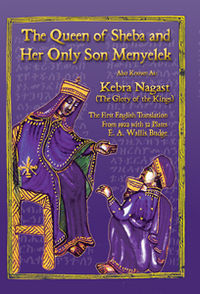
Sound like the stuff of romance novels? Yes, this was a romance writ large because it was an affair of state and royalty. And these characters appear in no less than four holy books: the Torah, the Koran, the King James Bible and the Kebra Nagast (The Glory of Kings).

In Biblical times, he who could kill or overcome enemy tribes became king. With lots of children and careful planning, his heirs would succeed him. But not all countries had the same traditions. In some parts of the world, women ruled by might or by right to the throne. For the royals, marrying and having children was an affair of state. Right up until recent times, it was not uncommon for the royalty of different lands to marry for the mutual benefit of their countries. In our modern era, heads of state and heirs to thrones have been granted the freedom to marry whom they choose--within reason.

Millennia before Prince William and Kate Middleton’s time on the world stage, people have been royal watchers. Some watched to see if they were in favor and able to gain, others to see if they were out of favor and about to lose--their heads! Still others watched because it was simply the best show in town. So when the royalty of Israel met the royalty of Sheba, all eyes were upon them. Based on the appearance of these two royals in no less than four world religions, no one could resist watching the wise King Solomon and the beautiful Queen Makeda.

In researching my work-in-progress, Kiss of the Virgin Queen, I, too, have become a royal watcher--from a distance of over three thousand years. My historical voyeurism has taken me down a circuitous path across time and cultures to their mythic romance. Destinies entwined, some would say the Makeda/Solomon romance was beshert.

With construction on the first Temple well underway by the time King Solomon greeted the extravagantly generous Queen of Sheba,* he already had seven hundred (700) wives and three hundred (300) concubines. By marrying princesses of rival kingdoms, he had built an extraordinary alliance and ensured the safety of the trading routes. Curious about the man behind the legend, Queen Makeda traveled fifteen hundred (1500!) miles from Ethiopia to meet the wisest man on earth--and to ask him “hard questions.” When they met, the Queen was “left breathless by Solomon’s magnificence” (Coogan, Brettler, Newsom, & Perkins, 2001, pp. 508). The attraction was mutual--but there was nothing they could do about it. Or was there? The eyes of the world were upon them.

The Queen, while madly in love with Solomon, had to return to her country a virgin, or risk losing her throne. For his part, King Solomon was besotted with her and had to have her. In a cagy move, Solomon feasted with Makeda and made her promise never to steal from him. If she broke the promise, she had to sleep with him. Offended, Makeda pointed out that she had no need to steal from him, that in fact she had more gold and spices than she needed in her home country. However, unbeknownst to the Queen, the King had her food heavily spiced. That night, she became terribly thirsty and searched the palace for water. The only pitcher available was in King Solomon’s room. When she drank, he leaped up and demanded that she come to his bed. That night Solomon dreamed the sun travelled from Israel to her home country, Ethiopia.

Much as she wanted to stay, Makeda insisted on returning home carrying within her a very special gift from Solomon. Saddened by the loss of his true love, King Solomon gave her a signet ring and told her that if she had a son, to send him back to Israel with the ring so he would know him. Nine months later, Menelik was born just outside of Ethiopia. He grew up strong, healthy--and the spitting image of King Solomon. When he turned twenty-two, he insisted on meeting his father. Queen Makeda gave him the signet ring, but there was no need for it as everyone in Jerusalem could see he was his father’s son. King Solomon rejoiced and anointed his son, renaming him David, after his grandfather.

But the Elders and the seven hundred wives and the three hundred concubines grew worried. What if this David took over? What of the other sons of Solomon? After a meeting of the Council of Elders, Menelik/David was sent home much to his pleasure, but against his father’s wishes. King Solomon decided that since his eldest son had to leave, so should the eldest sons of all the other tribes. Amid great noise and with many wagons and animals, David departed. But little did King Solomon know at the time, the Ark of the Covenant went with him.

When the loss was discovered, King Solomon sent his horsemen after the travelers. To their amazement, the ark and the retinue were gone. Sped on by the Ark’s own desire to be with Menelik/David, its supernatural powers enabled it to move faster than the horsemen. To this day, the Ark of the Covenant is kept in Axum, Ethiopia, watched over by a priest for his entire lifetime.

This story, like many other wonderful legends, takes place in the space between religion and the paranormal. Kiss of the Virgin Queen will explore that space and the effects of the epic romance between King Solomon and Queen Makeda that continue to ripple down the centuries to their descendants. Stay tuned.

*(“Then she gave the king 120 talents of gold, a great quantity of spices, and precious stones, never again did such spices come in such quantity as was that which the queen of Sheba gave to King Solomon” (Kings 10:10 in Coogan, Brettler, Newsom, & Perkins, 2001, pp. 508-509).

If you are interested in reading more about this topic, here are some books for you.

Budge, W. (Translator). (2007). The Kebra Nagast (The Glory of Kings). Lexington, KY: Silk Pagoda.

Clapp, N. (2001). Sheba: Through the Desert in Search of the Legendary Queen. New York, NY: First Mariner Books.

Coogan, M.D., Brettler, M.Z., Newsom, C.A., & Perkins, P. (Eds.). (2001). Kings 10:1-13 in The New Oxford Annotated Bible. New York, NY: Oxford University Press, p. 508-509.

Fraser, A. (2004). The Warrior Queens. New York, NY: Anchor Books.

Razwy, S.A.A. (Ed.) & Ali, A. Y. (Translator). (2009). The Qur’an Translation. Elmhurst, NY: Tahrike Tarsile.

*****
Sharon Buchbinder has been writing fiction since she was in high school and has the rejection slips to prove it. After graduating with a BA in Psychology and no job, she realized her dreams of working in the attic writing great prose would have to take a back seat to the simple pleasures of eating, drinking, and having a roof over her head. Fast forward a few decades, and she had a career path that would make all but the kindest say, "What were you thinking?" After working in health care delivery for years, she became a researcher, then a professor. She had it all--a terrific, supportive husband, an amazing son, and a challenging job. But that itch to write (some call it obsession), kept beckoning her to "come on back" to writing fiction. Her genres include horror, mystery, romance and weird blends of the three. When not attempting to make students and colleagues laugh, she can be found herding cats and dogs, golfing, deep sea fishing, or writing. Visit Sharon at http://www.sharonbuchbinder.com/ to learn mor about her stories available for your reading pleasure.
 

Thursday, February 24, 2011

Historical Romance Review: Moonstruck Madness, by Laurie McBain

I recently finished reading Laurie McBain's book, Moonstruck Madness, re-issued this month with Sourcebooks (originally pubbed in 1977).  The book takes place in both Scotland and England, during and a few years after the Battle of Culloden.

I like the new book cover.  The one of I have on the ARC I received pictures a much older heroine, which I found disturbing since Sabrina is only about 17 in the book, and the woman on the original cover looked to be in her mid-thirties.  So kudos for updating the cover!

Book Info...

She’s one thing by day, something else altogether by night…After escaping the slaughter of her clan at a young age, Scottish noblewoman Sabrina Verrick provides for her siblings by living a double life, until the night she encounters the Duke, and her secret and all she holds dear is threatened…

He’s so disillusioned, he’s completely vulnerable…
With his inheritance at stake, Lucien, Duke of Camareigh, sets a trap for the Scottish beauty with the piercing violet eyes, never imagining what will happen when the trap is sprung…

As their lives become irreversibly entangled, Lucien and Sabrina become each other’s biggest threat, as well as their only salvation…

ISBN: 9781402242434

Pubbed in February 2011
Available now from Sourcebooks in Trade paperback

My Review...  **there are spoilers in this review, so don't read any further if you plan on buying this book**

This book was a quick read, with a lot of sensory and scenery detail. I was able to completely immerse myself in the story and visualize everything that was happening. The historical details were mostly good, except, I don't see how the Dowager Duchess could prevent the Duke from inheriting his seat, as that would be the pervious Duke's ability--but I could be wrong.

That being said, I wasn't exactly blown away by the heroine or hero, and this may be in part by what Ms. McBain played on as their faults, but they were just too darn arrogant and prideful for me to really get to know them or inside their heads--and yes in the end they do get over these flaws for the most part. The heroine never seemed to learn and was willing to put a lot of people in danger not necessarily for anything other than to stroke her own ego and need for revenge. I found her at times to be immature, naive, and so stubborn it was grating on the nerves.  Likewise with the hero.  Additionally, for a man that is supposed to be intelligent, I found it odd that he didn't figure out earlier that his cousins were setting him up.

I also had a problem with the ending.  There is this huge buildup, there is so much tension between the h/h that you aren't sure if they are every going to get together--and they don't solve their problems on their own. She just mulls it over in her mind and then after he saves her, they decide to love one another again.  I really missed watching them having to play out their emotional conflicts face to face. I also found the round-up of the cousins to be too fast, and not enough punishment done to them--in other words, unrealistic.

Now, despite the issues that I had, the book was entertaining, sensual, and the actual plot was very good. There were several places I laughed, and many things I couldn't wait to read further on. So, I wouldn't say don't read it. The book was good.  You just have to look over some of the more dated character flaws that you don't necessarily see from today's more modern writers.

Wednesday, February 16, 2011

Petticoat Spies: Rose O'Neal Greenhow aka Rebel Rose

Welcome back, Victoria Gray with her Petticoat Spies series!  Today she will delight us with her post on Rose O'Neal Greenhow, also known as Rebel Rose. If you missed the last post on "Crazy Bet", click here.

Rose O’Neal Greenhow: Rebel Rose
By Victoria Gray


As I discussed in my previous post, one of the Union’s most successful spies was a spinster who hid in plain sight, her eccentric, slightly mad persona the perfect disguise for their activities. Widely known as “Crazy Bet”, Elizabeth Van Lew rubbed elbows with Richmond elites while ferrying information to Union generals. The South also had its share of petticoat spies. Today, I’m going to share the story of Rose O’Neal Greenhow, possibly the most notorious of the Confederacy’s female spies.

Rose Greenhow was in many ways Elizabeth Van Lew’s opposite. A popular Washington, D.C. hostess, she flattered secrets out of the nation’s political and military elite. Married as a young woman to a State Department employee, Robert Greenhow, Rose associated with notables such as Dolley Madison and John C. Calhoun. Sophisticated and gracious, her charm proved as effective a disguise as Crazy Bet’s eccentricities when the war broke out in 1861 and Rose’s sympathy for the Confederacy led her to betray those who considered her a friend.

“Rebel Rose” quickly proved her mettle as a spy, providing Union general Beauregard with information that helped the South rout the North in the First Battle of Bull Run. Transporting the sensitive intelligence in the hair of a female courier, Rose demonstrated her ingenuity and her effectiveness.

Her activities were not without risk. Before long, she’d attracted the attention of Allan Pinkerton, who’d been brought in by the Union to combat espionage. Placed under house arrest, her home was occupied by Union soldiers and used to house other female prisoners. Confinement in Fort Greenhow, as her home came to be known, did not put a stop to Rose’s activities. Communications complaining of her mistreatment leaked out, creating great sympathy for her in the South. After several months, Fort Greenhow was closed. Rose and her young daughter were transferred to the Old Capitol Prison.

While in Old Capitol, Rose became a propaganda tool for the South, which portrayed the Northerners who’d imprisoned her as brutal for imprisoning both a woman and her child. Following a hearing that seemed to accomplish nothing, Rose Greenhow was exiled to Richmond. Mrs. Greenhow soon traveled to Europe, meeting with Queen Victoria, Napoleon III, and other members of the elite to garner support for the Confederate cause, while her book detailing her confinement in Washington during the first year of the war became a best seller in Britain.

Rose Greenhow’s European trip culminated in tragedy. On the last stretch of the voyage home, the ship on which she traveled ran aground off the North Carolina coast. While attempting to reach shore on a small boat, Mrs. Greenhow’s vessel capsized. She drowned and was buried with full military honors in Wilmington, North Carolina.

While she met a tragic end, Rose Greenhow lived her life defiantly, serving a cause she believed in quite passionately. She was a daring woman who stood up for her convictions, regardless of the cost, one of many women on both sides of the conflict who made great sacrifices for their beliefs.

Leave a comment for a chance to win an e-copy of Victoria's latest novel, ANGEL IN MY ARMS.

Victoria Gray writes sizzling Civil War era romance novels. Visit her at: http://www.victoriagrayromance.com/ or http://victoriagrayromance.blogspot.com/

Friday, February 11, 2011

Guest Blogging about Saint Valentine's Day

I am thrilled to have been invited to blog today at Victoria Gray's romance blog. I've posted about the history behind Valentine's Day! The romantic day dates back hundreds and hundreds and hundreds of years. Come on by to read up on it, and if you leave a comment you'll be entered in a drawing to win an e-copy of my novella, HER CAPTAIN DARES ALL.


Click here to read:  Saint Valentine's Day -- Not Just a Modern Gimmick

See you there!

Eliza Knight

Wednesday, February 9, 2011

SIR WALTER RALEIGH DID WHAT?! By Nancy Lee Badger

Welcome back to History Undressed, guest author, Nancy Lee Badger! Her article today is fascinating and of particular interest to me as it is about an Tudor courtier in Queen Elizabeth I's court. Enjoy!

SIR WALTER RALEIGH DID WHAT?!
By Nancy Lee Badger


Looking back, it seems that every article I have written for History Undressed has had a Scottish theme. Even before I sold my first historical paranormal, DRAGON’S CURSE, set on a Scottish island, I have loved everything about Scottish culture. But, I discovered historical society of a different sort, here in my adopted town of Raleigh, North Carolina.

Those who know me know the story. I ‘retired’ from public service at New Hampshire 9-1-1 and moved away from the snow and ice to a southern climate where I now write fulltime. My husband and I had visited Raleigh several times. Both of my sisters had moved here and it occurred to me that something had changed since our first visit.

The new Raleigh Convention Center is the diamond in the downtown’s revitalization plans. My sister and I drove into the city so she could register for a veterinary workshop. While driving by the front entrance, in search of a parking spot, there it stood…a larger than life bronze statue of the city’s namesake, Sir Walter Raleigh.

He used to be across town. That’s where I snapped his nighttime photo many years ago. How did he get here? (I have since discovered these new digs are the statue’s fourth home.)

Then I thought about the reason why his statue graced the newest building in downtown Raleigh, the capital of North Carolina. I dug around and came up with some interesting facts. Many tidbits of information confused me. I always thought of him as a larger-than-life hero for Queen Elizabeth. He was an English aristocrat, poet, writer, and explorer. The man has been romanticized in TV and movies. Did you see Simon Jones when he played Raleigh on the BBC sitcom Blackadder II in 1986? What about Clive Owen’s portrayal in Elizabeth: The Golden Age, a 2007 film? Unfortunately, his life was also full of wrong turns.

Born in England in 1552, he had a hand in suppressing rebellions and participated in a massacre in Ireland. Strike one.

He was put in charge of the first colonization of the “Colony and dominion of Virginia”. Settlers landed on Roanoke Island, an area that includes present day Virginia and North Carolina. This ended poorly when all the colonists disappeared off the face of the earth. To this day, they are remembered as The Lost Colony. Strike two.

Sir Walter was well known for popularizing tobacco in England. Strike three.

He secretly married one of Queen Elizabeth’s ladies-in-waiting, a big no-no, which earned him a stay in the tower of London. Strike four.

After the Queen’s death, he stood accused of participating in a plot against King James I. This ended in a lengthy stay in the bloody tower. Strike five.

When finally freed, he made two attempts to discover South America’s “City of Gold”, better known as El Dorado. Having no luck, his men ransacked a Spanish outpost. When he returned to England, he was arrested and beheaded in 1618. Yer out!

All is not lost. He had his great moments, too. Though wounded, he aided in the capture of the Spanish city of Cadiz. He was a member of parliament for both Dorset and Cornwall. He became governor of the Channel Island of Jersey. He wrote Volume 1 of The Historie of the World. He wrote poetry, such as The Lie and The Ocean to Cynthia. I cannot confirm the story everyone knows: Raleigh supposedly laid his cloak down to cover a puddle so that the Queen would not muddy her shoes. Was there a romance between these two powerful people? We might never know, but Sir Walter Raleigh DID write, “Romance is a love affair in other than domestic surroundings.”

Is this why he traveled the world? Is this why he adored Queen Elizabeth yet fathered children with two other women? My point is, like Sir Walter’s meandering statue, I have ‘lived’ in various locations. I hope we both have found our home in Raleigh, North Carolina. I also believe in another quote attributed to my new friend, Walter.

I can’t write a book commensurate with Shakespeare, but I can write a book by me.”

Thanks for the advice, Walter. I have!

For more information on Sir Walter Raleigh, his statue, or his poetry, check these links:

http://www.highbeam.com/doc/1P3-1607850821.html

http://the-lost-colony.blogspot.com/2010/04/sir-walter-raleigh.html

http://www.poemhunter.com/sir-walter-raleigh/

*****

Nancy Lee Badger is a member of Romance Writers of America, Heart of Carolina Romance Writers, Fantasy-Futuristic & Paranormal Romance Writers, Celtic Heart Romance Writers, and Sisters in Crime. She has four published novels and also writes contemporary romance and romantic suspense as Nancy Lennea: http://www.nancylennea.com/.

Website: http://www.nancyleebadger.com/

Blog: http://www.rescuingromance.nancyleebadger.com/

DRAGON’S CURSE is available from Whispers Publishing

Buy link: http://whispershome.com/erotic/romance/dragons-curse/