Above painting: Louis Jean Francois - Mars and Venus an Allegory of Peace

Pages

***All photos accompanying posts are either owned by the author of said post or are in the public domain -- NOT the property of History Undressed. If you'd like to obtain permission to use a picture from a post, please contact the author of the post.***

Friday, April 29, 2011

Guest Author, Ann Lethbridge on Hot Houses in the Regency

Today on History Undressed I am pleased to introduce you to historical romance author, Ann Lethbridge, and the fascinating topic of hot houses! Before a couple years ago, I thought the concept of hot houses was relatively new--ie, hot house tomatoes. Did you know they existed a several hundred years ago? Get ready to be tantalized!

Hot Houses in the Regency

by Ann Lethbridge

Kensington Palace Orangery
Knowing I am a romance author who writes stories set in the Regency, I am sure it doesn’t surprise you to learn that I am always looking for interesting places for my couples to enjoy each other’s company.

A folly or a boathouse can be used to good effect as can a gamekeeper’s cottage as featured in The Gamekeeper’s Lady out this month.

One thing one always has to keep in mind is that England can be cool, in winter and in summer and in between. So if one wants to stray out of doors for a tete a tete, it might be wise to pick something warmer One thing that many country houses had in common during this period was the old hot-house for exotic plants.


Longleat Orangery
 These buildings became popular from the seventeenth century on. The Dutch invented them, but the British embraced them and anyone who was anyone had to have one. You can find them at many of the large country houses from that period. They go by several names, orangeries, for growing oranges and lemons, and the occasional pinery for growing pineapples. There were greenhouses or conservatories for growing everything else, including flowers.

A pinery was a separate part of the greenhouse or orangery, where special pinery stoves provided sufficient heat for the tropical plant to produce fruit. A luxury indeed. Architects had a field day making these buildings both functional and beautiful.

Margam Orangery near Port Talbot in Wales
These then are all nice warm places in the winter. Yes, they have glass but they probably get quite misty with the warm air inside and the cold air outside. Wouldn’t you think? And after all, the architects would have expected their noble employers to enjoy such exotic surroundings and must have provided seating and benches, and alcoves within.

No rake could be expected not to take advantage. What couple in love could resist. I have set at least two stories within the perfumed warmth of a conservatory. What other interesting nooks and crannies can you think of where our regency couple might find a few minutes alone?


********

Ann Lethbridge writes for Harlequin Historicals, her most recent books, The Gamekeeper’s Lady and More Than a Mistress are in stores in April and May 2011. She was also invited to write a story for the digital Royal Wedding Series put out by Harlequin in celebration of the Royal nuptials of Prince William and Kate Middleton, taking place today, April 29th. She chose to write about the Regency wedding of Princess Charlotte and Prince Leopold in Princess Charlotte’s Choice.


If you would like to know more about Ann’s books you can go to her website at http://www.annlethbridge.com If you are interested in her travels though Britain and her Regency Research do drop in for a ramble at http://www.regencyramble.blogspot.com


The Gamekeepers Lady

Blurb: Frederica Bracewell grew up under a cloud of shame. As an illegitimate child, she was treated by her uncle like a servant. It wasn't until she encountered the new gamekeeper that shy, innocent Frederica started to feel like a true lady….

Lord Robert Mountford had been banished by his family. After a debauched existence, he reveled in the simplicity of a gamekeeper's lifestyle. Until temptation struck! Frederica's plain appearance and stuttering speech were a far cry from the ladies of the ton, but she might just be his undoing…and unmasking!


More than a Mistress

Blurb: Charles Mountford, Marquis of Tonbridge, has long felt the weight of responsibility. He knows he must do his duty and take a wife. But when he's left snowbound with the unconventional Miss Honor Meredith Draycott, he finds that his inner rogue wants to come out to play….

Merry doesn't need a man—no matter how handsome he is! Sadly, society takes a different view. Charlie is more than happy to make her socially acceptable, but only if she acts publicly as his betrothed and privately as his mistress!


Princess Charlotte’s Choice

Blurb: As Princess Charlotte prepares to marry Prince Leopold, her most trusted lady, Isabelle Fenwick, must remain chaste and beyond scandal. Yet she has never forgotten darkly handsome Count Nikkolae Grazinsky and the kiss he stole...

She later discovered the Russian had only used her for a wager, so why does he still seek her company? And why does the air tingle with anticipation when they are together? Surely this rake cannot be thinking of following Prince Leopold's example and making a love-match?


Thursday, April 28, 2011

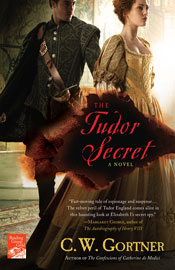
Historical Novel Review: The Tudor Secret, by C.W. Gortner

If you're looking for an action packed, Elizabethan book that encompasses everything there is to love about Tudor fiction: intrigue, scandal, betrayal, secrets, and those famous historical figures we all love, than you've got to check out, The Tudor Secret by C.W. Gortner!

This book is supposed to be the first in a new series, THE ELIZABETH I SPYMASTER CHRONICLES. I can't believe I have to wait until next year to read book two... I would like to read it now!

About the book: (from the author's website)

The era of the Tudors was one of spies, intrigue, conspiracy, and danger. . .

Summer, 1553: Brendan Prescott, an orphan reared in the household of the powerful Dudley family, is brought to court, where he finds himself sent on an illicit mission to King Edward VI’s brilliant, enigmatic sister, Princess Elizabeth.
But soon Brendan is compelled to work as a double agent by Elizabeth’s protector, William Cecil—who promises in exchange to help him unravel the secret of his own mysterious past.

A dark plot swirls around Elizabeth's quest to unravel the truth about the ominous disappearance of her seriously ill brother, King Edward VI. With only a bold stable boy and audacious lady-in-waiting at his side, Brendan plunges into a ruthless gambit of half-truths, lies, and murder.

Filled with the intrigue and pageantry of Tudor England, The Tudor Secret brings this world to life from a new perspective, telling the story of a spy who becomes the protector of England's future queen. (NOTE: The Tudor Secret is a new edition of The Secret Lion, with an additional new scene and some editorial polish.)

Griffen Trade Original, St Martin's Press (Trade paperback, 336 pages)

ISBN-10: 0-312-65850-8
ISBN-13: 978-0-312-65850-2

My Review:

From the beginning, the book hooks with the atmosphere of Elizabethan England, the horse ride, the entering of London, the people rioting. The author chose the perfect place to start the book.  The only thing I found confusing was the boy, Brendan, who is actually a man of twenty, I thought was much younger, but I think that is only because the steward kept referring to him as a boy and his thoughts came off as young. It soon becomes apparent that he is actually a grown man. This story had an underlying plot of a young man growing into manhood. Brendan starts out naive and young, and then with each ensuing event/action, he grows. We watch him blossom into a confident, strong, loyal man. And in the process he also discovers love, and to a woman who is independent and a warrior in her own right.


The book is action packed and never drags. Defeintiely a page-turner! Brendan is tossed into court and immediately dragged into the plots and intrigues of the Dudley's--his employers, and that of Cecil--who is simultaneously working for Elizabeth and Edward--and helping Mary on the side.

I feel like the author really did a good job of portraying the historical figures, and I could really see them the way I imagine them to have been.

This was a different sort of Tudor book than what I usually read, (books based on actual events/people) and I enjoyed it. Mr. Gortner, using a great deal of creativity, gave us a fictional hero and a fictional plot, but he weaved it so well into the history, that if I hadn't known it was fiction, I would have believed this story actually happened. Kudos to the author for that! Weaving fiction into history is no easy feat, and it takes a true artist to do it to seamlessly. I have not read any other Gortner books, but I will certainly be seeking them out now. I highly recommend The Tudor Secret!

Wednesday, April 27, 2011

Guest Author, Margaret Mallory on SCOTLAND, 1513: From the Golden Time To Chaos

I am super excited today to introduce you all to our guest author, Margaret Mallory. Margaret is a 2010 RITA Finalist for her book, Knight of Pleasure, the second book in her England-set medieval series ALL THE KING'S MEN. But today, she's here to tantalize us with a bit of Scottish history (and a girl after my own heart since her post also happens to be about the Tudors!) and her NEW Scottish romance series--which I CAN'T WAIT to read! I had the pleasure of meeting Margaret in person last year at the RWA National Conference, as well as enjoying membership with her through Celtic Hearts Romance Writers and Hearts Through History, she is sweet, funny and smart and I look forward to reading her work for many years to come! So, without further ado, I give you Margarget!

SCOTLAND, 1513: FROM GOLDEN TIME TO CHAOS
by Margaret Mallory


My new Scottish series, THE RETURN OF THE HIGHLANDERS, takes place during the chaotic aftermath of Scotland’s crushing defeat at the Battle of Flodden.
James IV
What a difference a day makes. In this case, that day was September 9, 1513, the day the Scots were defeated by the English at Flodden.

Before the Battle of Flodden, Scotland seemed to be on the verge of a golden age. King James IV fostered the growth of universities, supported musicians and poets, and built palaces that rivaled those on the continent.

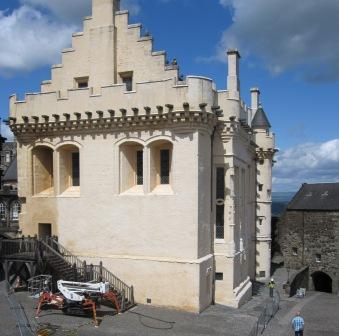
The Great Hall at Stirling Castle

The king, who learned to speak Gaelic, even gained the allegiance of the usually rebellious Highland chieftains. For a time, he also achieved “Perpetual Peace” with England by his marriage to Margaret Tudor, Henry VII daughter, in a union hailed as the Thistle and the Rose. Peace, perpetual or otherwise, proved difficult to maintain with Margaret’s aggressive, younger brother, Henry VIII. When France called on Scotland’s help in fighting the English, James IV honored the Auld Alliance and marched into northern England with perhaps 30,000 men.


Margaret Tudor
Henry VIII - 1509
The king led the Scots to a crushing defeat at the Battle of Flodden in Northumberland. Thousands of Scots died in the battle. The king, who foolishly put himself in the thick of the battle as if he were an ordinary soldier, was among the many, many dead. His body was so mutilated that there rumors for years that the body was not his and that the king had escaped.

Unfortunately for Scotland, the king left a seventeen-month-old babe as heir to the throne. Pro-French and pro-English factions vied for power, and clan chieftains saw an opportunity to increase their lands and influence.

The young and handsome Douglas chieftain, the Earl of Angus, charmed his way into the queen’s bed almost before the king’s body was cold. The fact that Margaret Tudor was pregnant with the dead king’s child did not appear to give either of them much pause.

Archibald Douglas, Earl of Angus
My hero and heroine in THE GUARDIAN, Book 1 of THE RETURN OF THE HIGHLANDERS, meet up with this dangerous pair of lovers on a trip to Stirling Castle.

Douglas overplayed his hand when he married Margaret. The Council was leery of having their enemy’s sister as regent and was glad for an excuse to replace her with the Duke of Albany, a Stewart who was raised in France. Margaret, however, refused to hand over the royal children until Albany laid siege to Stirling Castle.


Margaret Tudor Defying Parliament
A number of Highlander chieftains also died at Flodden, although there are conflicting stories as to how many and which ones were killed in the battle. This sudden change in the leadership of several clans added another layer of volatility, shifting alliances, and violence. In addition, the lack of a strong king led some of the Highland clans to rise up in rebellion again.

James IV was a Renaissance man, ahead of his time. In addition to supporting education, music, and new architecture, he unified his fractious country, skillfully negotiated European politics, and brought a period of relative peace to Scotland.

The four heroes of my RETURN OF THE HIGHLANDERS series left for France five years before the battle that changed everything. As soon as they hear the news of the Scot’s devastating loss to Henry VIII’s forces at Flodden, they hurry home to help their clan through the troubled times ahead.

And troubled times they were.

*****

Visit Margaret Mallory at http://www.margaretmallory.com/.  Leave a comment for your chance to win a signed copy of Ms. Mallory's new release: THE GUARDIAN!!!

THE RETURN OF THE HIGHLANDERS: BOOK I


Four fearless warriors return to the Highlands to claim their lands and legacies. But all their trials on the battlefield can't prepare them for their greatest challenge yet: winning the hearts of four willful Scottish beauties.

PASSION IGNITED

After years of fighting abroad, Ian MacDonald comes home to find his clan in peril. To save his kin, he must right the wrongs from his past . . . and claim the bride he's long resisted.

As a young lass, Sìleas depended on Ian to play her knight in shining armor. But when his rescue attempt compromised her virtue, Ian was forced to marry against his wishes. Five years later, Sìleas has grown from an awkward girl into an independent beauty who knows she deserves better than the reluctant husband who preferred war to his wife. Now this devilishly handsome Highlander is finally falling in love. He wants a second chance with Sìleas - and he won't take no for an answer.


__

Photos courtesy of Wikipedia, with the exception for the photo of The Great Hall, which was taken by the author, the author's photo, and the cover picture.


Monday, April 25, 2011

Guest Author Victoria Gray - PETTICOAT SPIES: Corsets, The Civil War, and Pauline Cushman

Welcome back to guest author, Victoria Gray, who is tantalizing us yet again with another post in her Petticoat Spies series. If you've missed her other posts, you'll want to check them out! Rose O'Neal Greenhow and Elizabeth Van Lew.  It amazes me how these women lived! Enjoy!

PETTICOAT SPIES: CORSETS, THE CIVIL WAR, AND PAULINE CUSHMAN]
By Victoria Gray
The Civil War and the adventurous ladies who broke past society’s restrictions (or used them to their advantage) and used their feminine wiles to gather information for their cause is a favorite subject of mine. One such petticoat spy, Elizabeth Van Lew, not-so-fondly known as Crazy Bet in her native Richmond, was the inspiration for the crazy-as-a-fox spymaster in my recent release Angel in My Arms. I visited History Undressed with her story in January…hope you’ll take a peek in the archives if this article stirs your interest in the brave women who risked it all to serve the North and the South. Today, I’d like to introduce you to a legendary Yankee petticoat spy, Pauline Cushman.

Born Harriet Wood on June 10, 1833, the New Orleans native moved to Michigan as a girl. Leaving home at age eighteen, she took off for New York, where her beauty and vibrant personality fostered a career as an actress. After changing her name to Pauline Cushman, she traveled the country in road shows. When the war broke out in the spring of 1861, she was performing in Kentucky, which was at that time under Union control. Confederate officers who viewed her performance offered her a substantial sum to toast Jefferson Davis during her show. Seizing her opportunity, Pauline parlayed the on-stage toast into espionage. Held by Union officers in a pre-planned “arrest”, she became an instant heroine to the Confederates. The Federal officials then threw her out of Union territory, providing her a reason to follow the Confederate Army. Claiming to look for a long-lost brother fighting in the Rebel army, she spent time with Confederate soldiers who shared information on their defenses and operations, gathered lists of Confederate spies and used her riding skills to serve as a Union messenger.

Her assignments grew more daring and more dangerous. Infiltrating the camps of Confederate General Braxton Bragg, Pauline used her beauty and charm to loosen the lips of Confederate officers and gather information. Confronted with more information on defenses, war strategies, and weapons than she could possibly remember, she violated a key rule: never carry documents that would reveal her activities. Feeling she had found the perfect place to hide her notes, she concealed the papers in the soles of her shoes. This came back to haunt her when she was betrayed by a Confederate scout. Arrested and tried by a military court, she narrowly escaped a death sentence by hanging when Union forces invaded the town where she was being held, Shelbyville, Tennessee. Awarded the rank of Brevet-Major by General James Garfield, she wrote a book about her adventures, appropriately titled The Thrilling Adventures of Pauline Cushman and toured the country regaling crowds with the tales of her exploits.

Pauline Cushman died in December 1893. She was buried with full military honors. Her gravestone lists only her name and a unique designation: Union Spy.

I’ll be back this summer with more tales of petticoat spies. My Civil War-era novels Destiny, Angel in My Arms, and my upcoming release, Surrender to Your Touch, were inspired by the espionage and intrigue that surrounded the Civil War. In my latest release, Angel in My Arms, Union spy Amanda Emerson must break her cousin, a notorious double agent, out of a Confederate prison before his imminent execution. She’s a skilled Union operative, but for this mission, she needs a man. Even a man who looks and acts like a Viking warrior. Caught with Rebel battle plans and set for a hanging, Union spy Steve Dunham isn’t about to refuse the assistance of the sable-haired beauty who shows up at the jail and slips him the keys to his cell. Of course, she’s there for a reason besides saving his neck—he’s the key to her plan. He may be trading one noose for another, but he won’t forsake her. The spoils of his victory will be her surrender. And the terms of surrender will be sweet.

Here’s an excerpt:

“Are you working for DuBois?”

“I don’t know what you’re talking about.” Amanda steadied her voice. If she didn’t keep her fear tightly leashed, she would fall apart. She had no time for that.

“I think you do. Why else would you break a man out of jail who smells and looks like the town drunk and ride off with him? Did you plan to charm me into revealing the details of my mission?”

“Betsy thought we could count on you. She’s been told—”

“I’m not the guard in that country jail.” His hand moved from her hair to the small of her back, pressing her to him. “Do you realize how easy it would be for me to hike up your skirts and savor some of the charms you flaunted?”

Amanda tasted bile as his words stabbed with the viciousness of a stiletto.

To hell with this man.

Her palm struck his bearded cheek with all the force Amanda could muster. His eyes widened as one broad hand rose to rub his face. She wrenched away and bolted to the horse as fast as her cumbersome skirts would allow.

She couldn’t escape him if he chose to pursue her. Amanda knew that. But she had to try.

Captain Dunham captured her in his arms before she could lift herself into the saddle. “Where do you think you’re going?”

Despite Amanda’s best efforts to deprive him of the satisfaction of seeing her weep, moisture brimmed in her eyes. “You were right. My source was entirely wrong about you.”

She shoved against his chest, but she might as well have been a mouse trying to open a barn door. He didn’t budge. His arms coiled around her and dragged her against his body.

He peered down to study her for several breaths. Then his hands moved higher, stroking Amanda’s back and shoulders with soothing pressure.

“What the hell are you doing out here?” His gruff drawl had lost its angry edge. “Don’t you know how dangerous men can be?”

She swallowed hard. “We were desperate. Betsy thought you would help us.” Amanda wriggled away from his touch. “She was wrong.”

“Why did you come for me?”

“I’ve tried to tell you. But you won’t listen.”

He caught her in his arms again. “Tell me now.”

She twisted to free herself. “Take your hands off me. I’m going home. You can…you can find your way to your contact. You’re clever enough.”

He smiled but made no move to release her. “You’re not going anywhere without me. That would be like throwing you to the wolves.”

“This is coming from the man who spoke of hiking my skirts?” Amanda squirmed against him, brushing against undeniable proof he was not immune to her charms, as he’d described them. “I think I’ll take my chances with the wolves.”

“I thought you were working for…hell, it doesn’t matter what I thought.” He cast his gaze to the ground. “I would never hurt you. I don’t…I’ve never hurt a woman in my life. I was trying to make a point.”

She was tired. She was cold. And she needed to get away from him. It was bad enough when he frightened her. But now, the husky rasp in his voice stirred a warmth she couldn’t afford to feel.

“You’ve made your point very clear.” She veiled her eyes with her lashes. “You’ve also convinced me that seeking your assistance was a fool’s errand.”

“You sure are stubborn when you get riled.” He tipped her chin with one finger, keeping one hand planted firmly at her waist. “I don’t think I’ve ever seen a pretty girl get so angry with me.”

“I doubt there are many girls, pretty or otherwise, who’ve had as much justification.”

“In my defense, I thought you were leading me into a trap.”

“You don’t think that’s the case now?”

He shook his head. “If it was, I’d be dead by now. DuBois isn’t a patient man.”

Amanda trembled when he drew his fingertips very lightly along the curve of her face. Her top teeth grazed her bottom lip. His touch should repel her. But it didn’t. The sensations rippling through her body were not shudders of revulsion. To her horror, the sweep of his skin against her flesh was pleasant. Too pleasant.

Her teeth sank into her lip as she twisted against his restraint. “You shouldn’t touch me like this. Your behavior is most improper.”

“I suppose it is,” he agreed, his husky voice deepening.

“You need to let me go.” She held herself rigid and prayed he couldn’t feel the tiny quivers coursing through her body.

“I will.” The pad of his thumb swept over her bottom lip. “But you’re too damned pretty to resist.”

And then he kissed her.

Amanda’s knees went from weak to jelly. To her horror, she made no attempt to fight him. She stood transfixed, savoring the taste of his lips, the gentleness of his possession. This brute of a man claimed her with a tenderness she’d never felt in her twenty-four years. She could only remain a captive in his embrace, savoring his heat and his caress.

He released her slowly. Reluctantly. His hard body pressed to hers, stirring needs she’d buried on the brutal day she became a widow.

If his breath and the tension in his body were any indication, he’d been as affected by the kiss as she had. His fingertips traced over her cheeks. He watched her in the moonlight as though he’d discovered something rare and precious.

“Christ, tell me you weren’t acting,” he murmured against her lips.

*****

Leave a comment today for a chance to win a pdf of Angel in My Arms. Thanks for stopping by!

Visit Victoria at, http://www.victoriagrayromance.blogspot.com/ or http://www.victoriagrayromance.com/

Friday, April 22, 2011

Guest Blogger, Sarah Hoss on The History of the Scottish Quaich

Today, I'd like to welcome a new guest blogger to History Undressed. Sarah Hoss is a member of Celtic Hearts Romance Writers, which is where I met her, and she has just completed her first Scottish Historical. Wishing you much luck with submissions, Sarah! Now onto her interesting post... a little Scottish history for you, dear readers.

The History of the Scottish Quaich
by Sarah Hoss

Have you ever heard of a Quaich? It has a long history in Scotland. It is pronounced quake and comes from the Gaelic word “cuach.” During the Celtic period in ancient times, stories were told of how Druids would fill the Quaich with blood from the heart of their human sacrifices. Surrounded by mystery and myth, it has a colorful history.

A Quaich is a unique Scottish drinking vessel used in offering a drink of welcome or farewell. It is not like any other European drinking vessel. Travelers were known to carry a Quaich with them and the preferred offering was a dram of whisky.

The origin of the Quaich has been traced back to the Highlands. However, towards the end of the 17th century, the unique cup became more popular in the larger towns of Glasgow and Edinburgh. Quaichs were first believed to have been made of scallop shells but traditionally were made of wood. They were single timber, meaning they were made from one piece of wood turned on a lathe (a machine which rotates wood as it sands, cuts, drills or otherwise changes the shape of the object). They were wide, shallow and circular and from the sides of the rim jut small lug handles. The lugs project much of the Quaich’s special uniqueness in their design.

Early quaichs were stave-built, like barrels--meaning several bands of wood, typically held together by bands of willow or silver. To make a Quaich more unique, some would alternate light and dark woods. But they were not only made of wood--staves could be fashioned from stone, brass, pewter, horn, and silver. Silver Quaichs were often engraved with lines and bands in imitation of the staves on wooden Quaichs.

The center of the bowl would hold a silver coin or an engraved disc that would have the clan’s motto, coat of arms, or initials in it. The discs served as a sealant at the bottom where the staves met. A romantic gesture had a Quaich bottom made of two pieces of glass with a lock of the bride’s hair in between and the husband would drink to his lady love. In 1589, it is rumored that King James VI of Scotland, gave Anne of Norway a Quaich or “loving cup” as a wedding gift. It is also said the some Quaichs held glass bottoms to be able to keep an eye on their host.

I haven’t been able to find out if the latter is true or not. Part of me wants to believe that it is not after hearing over and over about hospitality in Scotland and how honor bound the clansmen were to upholding such a thing.

In modern times, the Quaich has been used at baptisms, at births to toast the health of the bairn, and at weddings. The wedding party drinks from a Quaich to show love and support.

Whatever its use, the Quaich has been a symbol of love and friendship. Through more than three hundred years, this tiny cup has brought together clan chiefs, crofters, strangers, and merchants under the banner of unity. The Quaich holds a special place in the hearts of anyone who cherishes Scotland and its history.

Visit Sarah at http://www.heart-of-romance.blogspot.com/

Wednesday, April 20, 2011

Guest Author, Jeanne Adams on A-Dressing the Dead Through Centuries

Last year, I had the pleasure of meeting today's History Undressed guest author, Jeanne Adams, at a writer's workshop. She was presenting a thoroughly engaging presentation on bodies--dead bodies. I am pleased to introduce you to her today, and for you to read her fascinating post!

A-Dressing the Dead Through Centuries
by Jeanne Adams


Hello Historical Undressers! Or should that be Undressed Historians? Either way, I'm thrilled to be here with you at History Undressed today. Thank you to Eliza for inviting me.


Early 20th Century Funeral
One of the key happenings in a tremendous number of historical novels is a "death in the family." Either the old Duke kicked off unexpectedly bestowing the title on the brilliant hero; or the onerous husband left the lovely hoyden a young, desperate widow; or the duel went badly for someone's brother/uncle/cousin/friend.

So, what happens then?

Well, most historical novelists leave that off-screen in the book. Why? I think its because the costuming, carriages and social mores are difficult enough to get right, they don't want to have to go researching how to deal with the dead too!

I, on the other hand, have a bizarre fascination with this topic. (I teach a class on body disposal, after all.) Throughout history, death rituals have been integral to society's function. From Great-Grandma's passing to Funerals of State, I've learned many morbid fact on how the business of death was handled.

Mourning Hair Pin
Of course, in ancient times, the rites and methods are primitive. Dig a hole, sing a song, wrap up some grave goods and slap a lot of rocks on top of the grave so the spirit can't come haunt you for anything you might have done - or not done - in life. The rock cairn, barrow or grave was pretty standard before the 10th century. Catacombs and so on were in vogue in the cities, but out in the countryside, it was the rock cairn.

We move up in history to more civilized times (relatively, of course!) and we begin to find actual rites and statues over the graves rather than plain rocks and even...drum roll, please....laws regarding the handling of the dead. As early as the eighteenth century, people were experimenting with embalming. The wars on the Continent, with their dismaying body counts, and weather conditions precluded bringing those first-son's remains home for a proper Christian/Jewish burial. This was unpopular with parents and siblings who were fond of that younger son who went off to war and stuck his spoon in the wall, so in the 1760's some enterprising German scientists worked out ways to preserve the tissues. It wasn't perfect and it wasn't popular, but it did work. So if you see someone use it in a book in the 1700s, they ARE technically correct. But if they indicate it was all the rage, they would be INcorrect. In fact, many places there were laws about embalming being a desecration, just like autopsies!

Crypts of Kings and Queens
It actually took quite a long time for embalming to catch on. It wasn't en vogue until the early part of the twentieth century, as we began to be so migratory. Some great heads of state were embalmed or preserved of course, so they could lie in state, but the majority of the Peers and the Commons had no such luxury. In fact, the undertaker wasn't usually a profession found anywhere but the very largest cities until the mid-to-late eighteen hundreds. If Grandma passed away at the manor house, she did so in the company of her family, who then took up the task of preparing the body. Usually, the women of the household would undress the body and wash it - necessary even today, given what the body does when all the muscles go slack - then dress the deceased in his or her final costume.

NOLA Crypts
In the early days, the body would then be laid out on a bier - sometimes a table, sometime simple planks over two saw horses. A cloth would be used to tie the mouth shut, and the hands would be secured together at the waist, usually with another cloth or a black ribbon so they wouldn't dangle down, or fall down at an inopportune or frightening time during a service, visitation or wake. Certain cultures put a coin in the mouth, the shoe, or the hand (some under the eyelids to keep the eyes shut - weird!). This is a holdover from the Pagan custom of paying Charon, the boatman, for safe passage to the underworld.

In most households, even the poorest, a shroud or pall would cover the body, scented candles would be lit at the head and foot, and flowers would be brought in as well. Lillies are associated with death and funerals because they have a strong scent and can cover the stench long illness can bring to a body, or the meat-gone-bad smell notifying all that decay may have already begun it's work. The shroud was black or dark grey and could be made of anything from dyed Belgium lace to black cotton.


"Dracula" Coffin

If the family were well off, a coffin would be built (notice I said coffin, not casket) by the local carpenter, furniture maker, or tradesman. Up until the late 1800s and early 1900s, there weren't big casket manufacturing concerns. Mostly, the local cabinetmaker took up this task for the local populace. There were specialists in this sort of thing in the bigger cities, again, but the well-to-do often still had one custom made for their loved ones. The poorer folk usually wrapped the body in canvas, or sailcloth, and the shroud and the cloth were all that stood between the body and it's return to the earth.

On the side note, a coffin is an eight-sided "Dracula box" and was the standard burial container until around 1910 when caskets - like the modern four-sided containers now in use - came more into vogue.

Antique Hearse
The gravediggers would be hired, the local livery stable would dust off the funeral coach for the wealthy, and gloss up the black horses or mules. The mourners would gather, mostly walking behind the coach, and proceed either to the family cemetery (no longer allowed for burials in most places, btw), the churchyard of the church in which Grandma worshiped, or if poor, the local draft-horse-hitch would carry the body to Potter's Field, or the Burying Ground for the Poor and Destitute. The body, in or out of the coffin, would be lowered into the ground with ropes, which would then be pulled out. (this is why there are usually two cross braces on the bottom of a coffin, insuring the ropes don't slip off and drop the body or casket unceremoniously, which would be very bad luck, and so the ropes can be pulled out of the grave.) Words spoken, tears wept, the gravediggers would cover the grave, and we process off the property and away to our chores, which continue on, even if Grandma is gone.

Post-Mortem
Photography
Costuming comes into play here as well, with mourning gowns and black armbands. I do wish people still wore black armbands, signifying the loss of a loved one, so that you didn't wish them HAPPY NEW YEAR! in a rollicking fashion if they'd just suffered a grief. Having lost a loved one at the holidays, it would have saved me some suffering to have some outward, costume-significant notification system, like they did in the old days!

Apart from dress codes, there are some other quite interesting and peculiarly morbid things of note from previous centuries. Sometimes, a lock of hair would be cut from the deceased's head and that lock would be woven into a piece of artwork, or pressed under glass and fashioned into a brooch or ring, as a memorial. These are called Memento Mori - Death Memorials - and are now quite collectible. Interesting in a gruesome kind of way, don't you think? It reached a high art form in Victorian times, with intricate beadwork, floral wreaths and framed "samplers" being made, all with hair from the various deceased members of the family!

And speaking of wakes, another interesting note is the fear many people had of being buried alive. Hence the Wake, or Death Vigil. Is Great Gramma really dead? Well, someone better sit up with her body and be absolutely sure. There'll be hell to pay in Heaven, if St. Peter tells you you buried Great Gramma before her time, right? So, there were coffins made with glass face plates, with bells on them so that if one suddenly awakened, one could ring the bell and notify one's kin that one was not yet dead. There were rappers - think a reversed door-knocker - nailed to the inside of the coffin. And even some which had latches and handles inside, so one could push one's way out should the need arise. As photography progressed in capability, a photographer would often be summoned to take a picture of the deceased in his or her coffin, as a memento. Grim, eh?

There are footnotes about the horses, the black feathers on the coaches, and I can't even get into all the antique military funerary fun in this short blog. If I did, you'd still be here reading it tomorrow!

I'm happy to answer any questions you might have, however, for works in progress, for curiosity, or for whatever reason you'd like to ask! I have a great deal of information about tombs and tombstones too...bwah-ha-ha-ha!

I'd love to know, from you, dear Undressed Readers (there's a visual!), if you've read a good funeral scene in a historical lately? I've not seen one in a while.....got any for me? And whilst you are all more historically inclined, I'd happily give away a contemporary - mine - to one questioner today. There are bodies in it, I assure you, as I like to blow things up.

Again, thank you for having me here today! Now...ask away!


Sunday, April 17, 2011

WORKSHOP: History of Underwear

The History of Underwear

Presented by Eliza Knight

 
1-Week Intensive Online Course: April 25th – May 2nd
Cost: $10.00

The subject of underwear is one that fascinates the human mind, and a fashion that is forever changing. From the time when leaves covered the private parts—at least in paintings and statues—to today’s bits of lace and tighty-whities, there seems to be an ever evolving ideal of what should go underneath our clothing.

The class will explore the fabrics and styles that have covered our nether-regions from medieval times through the Victorian era, and their functions.

During the class, pictures and a downloadable handout will be available to students, as well as exercises.

To register to take the class with Eliza Knight's Workshop Group, which will be conducted via a private yahoo group, please click this link for further instructions and payment: http://elizaknight.com/HistoryofUnderwear.aspx