Above painting: Louis Jean Francois - Mars and Venus an Allegory of Peace

Pages

***All photos accompanying posts are either owned by the author of said post or are in the public domain -- NOT the property of History Undressed. If you'd like to obtain permission to use a picture from a post, please contact the author of the post.***
Showing posts with label Lily of the Nile. Show all posts

Tuesday, December 3, 2013

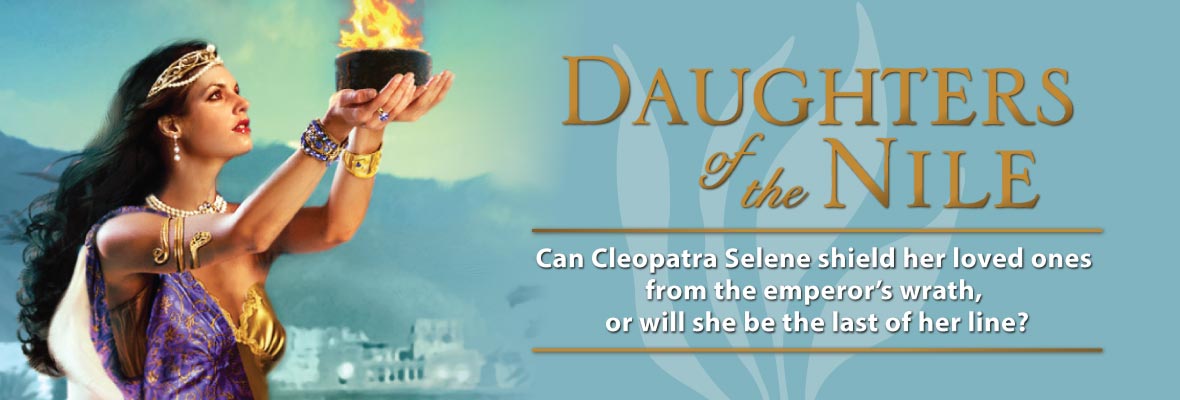
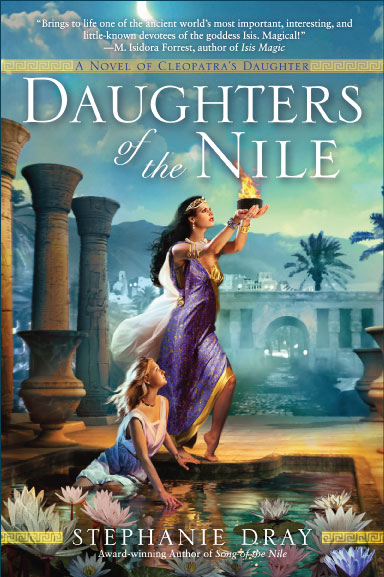
New Release: Daughter of the Nile by Stephanie Dray

Good morning!

I'm so pleased to share with you all the release of my good friend, Stephanie Dray's latest historical fantasy, Daughters of the Nile, the third book in her Cleopatra Selene series. I thoroughly devoured the first two books in the series and I can't wait to read this one! Perfect timing for my month of December read-a-thon, where I catch up on all the books on my TBR!


From critically acclaimed historical fantasy author, Stephanie Dray comes the long-awaited new tale based on the true story of Cleopatra's daughter.


After years of abuse as the emperor’s captive in Rome, Cleopatra Selene has found a safe harbor. No longer the pitiful orphaned daughter of the despised Egyptian Whore, the twenty year old is now the most powerful queen in the empire, ruling over the kingdom of Mauretania—an exotic land of enchanting possibility where she intends to revive her dynasty. With her husband, King Juba II and the magic of Isis that is her birthright, Selene brings prosperity and peace to a kingdom thirsty for both. But when Augustus Caesar jealously demands that Selene’s children be given over to him to be fostered in Rome, she’s drawn back into the web of imperial plots and intrigues that she vowed to leave behind. Determined and resourceful, Selene must shield her loved ones from the emperor’s wrath, all while vying with ruthless rivals like King Herod. Can she find a way to overcome the threat to her marriage, her kingdom, her family, and her faith? Or will she be the last of her line?

Read the Reviews

"A stirring story of a proud, beautiful, intelligent woman whom a 21st century reader can empathize with. Dray's crisp, lush prose brings Selene and her world to life." ~RT Book Reviews

"The boldest, and most brilliant story arc Dray has penned..." ~Modge Podge Reviews

"If you love historical fiction and magical realism, these books are for you." ~A Bookish Affair


Read an Excerpt


Below me, six black Egyptian cobras dance on their tails, swaying. I watch their scaled hoods spread wide like the uraeus on the crown of Egypt. Even from this height, I'm paralyzed by the sight of the asps, their forked tongues flickering out between deadly fangs. I don't notice that I'm gripping the balustrade until my knuckles have gone white, all my effort concentrated upon not swooning and falling to my death.
And I would swoon if I were not so filled with rage. Someone has arranged for this. Someone who knows what haunts me. Someone who wants to send me a message and make this occasion a moment of dread. My husband, the king must know it, for he calls down, "That's enough. We've seen enough of the snake charmer!"

There is commotion below, some upset at having displeased us. Then Chryssa hisses, "Who could think it a good idea to honor the daughter of Cleopatra by coaxing asps from baskets of figs?"

The story the world tells of my mother's suicide is that she cheated the emperor of his conquest by plunging her hand into a basket where a venomous serpent lay in wait. A legend only, some say, for the serpent was never found. But I was there. I brought her that basket. She was the one bitten but the poison lingers in my blood to this day. I can still remember the scent of figs in my nostrils, lush and sweet. The dark god Anubis was embroidered into the woven reeds of the basket, the weight of death heavy in my arms. I can still see my mother reach her hand into that basket, surrendering her life so that her children might go on without her. And I have gone on without her.

I have survived too much to be terrorized by the emperor's agents or whoever else is responsible for this.
If it is a message, a warning from my enemies, I have already allowed them too much of a victory by showing any reaction at all. So I adopt as serene a mask as possible. My daughter blinks her big blue eyes, seeing past my facade. "Are you frightened, Mother? They cannot bite us from there. The snakes are very far away."

I get my legs under me, bitterness on my tongue. "Oh, but they're never far enough away."

Available now in print and e-book!


Did you miss the first book in the series?


Available now in print and e-book!

STEPHANIE DRAY is a bestselling, multi-published, award-winning author of historical women’s fiction and fantasy set in the ancient world. Her critically acclaimed historical series about Cleopatra’s daughter has been translated into more than six different languages, was nominated for a RITA Award and won the Golden Leaf. Her focus on Ptolemaic Egypt and Augustan Age Rome has given her a unique perspective on the consequences of Egypt's ancient clash with Rome, both in terms of the still-extant tensions between East and West as well as the worldwide decline of female-oriented religion. Before she wrote novels, Stephanie was a lawyer, a game designer, and a teacher. Now she uses the transformative power of magic realism to illuminate the stories of women in history and inspire the young women of today. She remains fascinated by all things Roman or Egyptian and has-to the consternation of her devoted husband-collected a house full of cats and ancient artifacts.

Tuesday, October 18, 2011

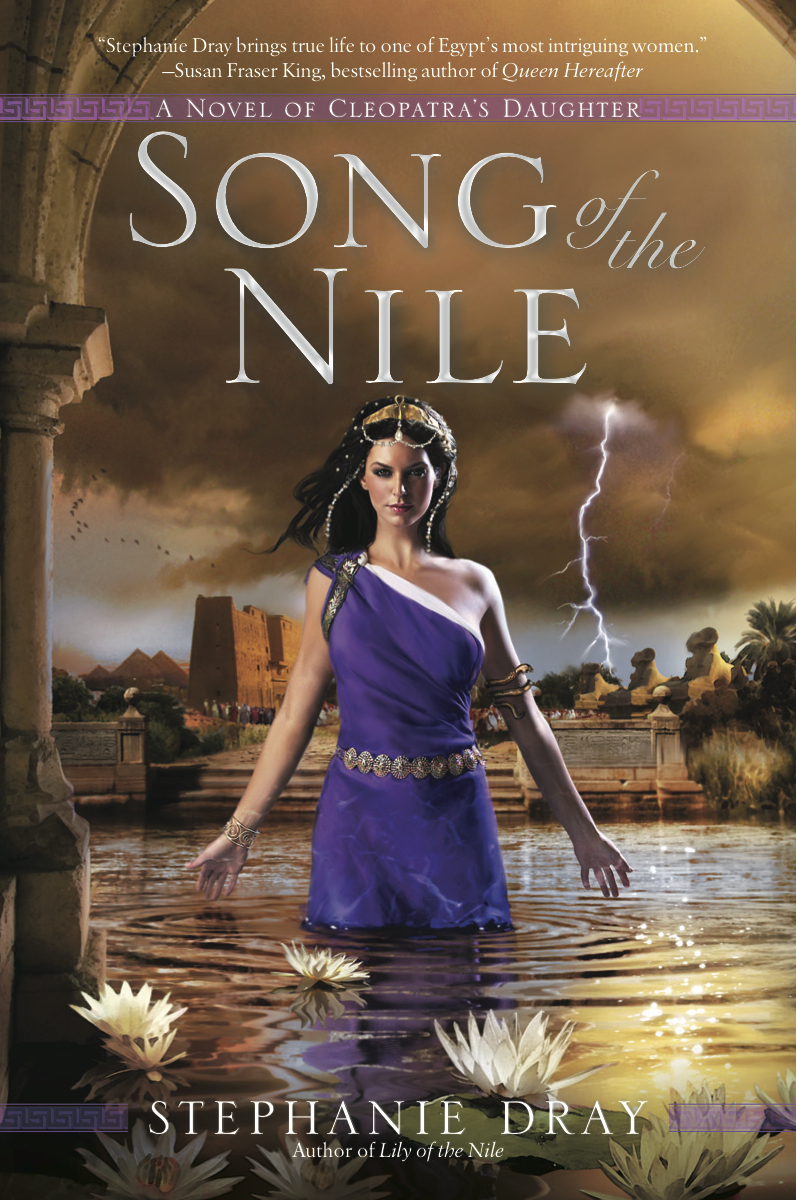
Historical Novel Review: Song of the Nile by Stephanie Dray

I recently had the pleasure of reading Stephanie Dray's second novel in her Cleopatra's Daughter series, Song of the Nile.

If you'd like to read my review of the first novel, Lily of the Nile, click here.


BOOK INFO: (borrowed from the author's website)


Sorceress. Seductress. Schemer. Cleopatra’s daughter has become the emperor’s most unlikely apprentice and the one woman who can destroy his empire…
Having survived her perilous childhood as a royal captive of Rome, Selene pledged her loyalty to Augustus and swore she would become his very own Cleopatra. Now the young queen faces an uncertain destiny in a foreign land.
Forced to marry a man of the emperor’s choosing, Selene will not allow her new husband to rule in her name. She quickly establishes herself as a capable leader in her own right and as a religious icon. Beginning the hard work of building a new nation, she wins the love of her new subjects and makes herself vital to Rome by bringing forth bountiful harvests.
But it’s the magic of Isis flowing through her veins that makes her indispensable to the emperor. Against a backdrop of imperial politics and religious persecution, Cleopatra’s daughter beguiles her way to the very precipice of power. She has never forgotten her birthright, but will the price of her mother’s throne be more than she’s willing to pay?
Berkley Trade October 2011 (Trade Paperback)
# ISBN-10: 0425243044
# ISBN-13: 9780425243046


MY REVIEW: (may contain some spoilers, but not really)

I really really really liked the first book in this series and so I was looking forward to seeing what happened next in Selene's life. She was such a strong young woman with so much going for her. Would she find her brother? What would happen between her and the emperor? Livia? Everyone else? Would she ever regain her mother's kingdom?

This book starts out just as riveting as the last book, pulling me in. The author has done a lot of research into her setting, events during the time period, the people, materials, food, clothing, dye, ships, religion, and so much more. When an author does this extent of research and weaves it into the story so well that I feel I am deep within a the period--as if I time-traveled--then they've done a great job! And Ms. Dray certainly did that.

There is a lot of controversy regarding a topic that takes place in this novel--incest. Please keep reading for a full understanding of this. It was not done in a gross or icky way, and if you read the first story, or have some knowledge on Egyptian culture, then you would realize this was not taboo in the time period. Cleopatra--Selene's own mother--married her brother. Many royals have married within the family to keep the crown, money, lands for themselves. I've read conflicting reviews about the relationship between Selene and her brother. I must say that within the context of this book, it did not bother me for a number of reasons.   One: in the first book it is said they are to be married. They've grown up believing they will be married. Two: Selene herself explains that she does not see him as her brother. He is her soul mate, her healer. There is no historical evidence that his relationship actually occurred, but I applaud the author for taking a leap, and for doing it in a tasteful way.

The relationship between Octavia and Selene really puts me through an emotional wringer! I really don't like him--yet I understand him (except for the rape--that I was really tormented over). I am so mad at how he treats her, uses her, I want to jump within the pages and punch him! His wife, Livia, is even worse. I feel so bad for Selene that she has to deal with these people. Now, I must explain why I said I understand him. During that time period, emperor's had to be ruthless to keep their place. They were assassinated by their peers without warning, so I understand why he's the way he is, and Dray did a great job portraying that.

For me, I saw Selene really struggling with becoming an adult. There was so much she had to deal with--a new husband who she despised and also loved at the same time, being raped, having a child, building a country, trying to establish her place in her new kingdom, dealing with negative council members, tribesmen, people altogether, friendships, her relationship with her brother, seeking her mother's kingdom, and oh-so-much more. I can see her becoming depressed, confused, angry, frustrated. It is a struggle that really affects the reader. Sometimes I wanted to shout at her for her decisions and other times I shouted for joy at her triumphs. In the end, Selene came out on top, and I was proud of her.  I eagerly look forward to reading the third book.

Well done, Ms. Dray!

If you enjoy reading books in this era, than I would recommend reading Song of the Nile, but be warned it does contain controversial material, and will affect you emotionally as you read.

Cheers,
Eliza


Wednesday, February 2, 2011

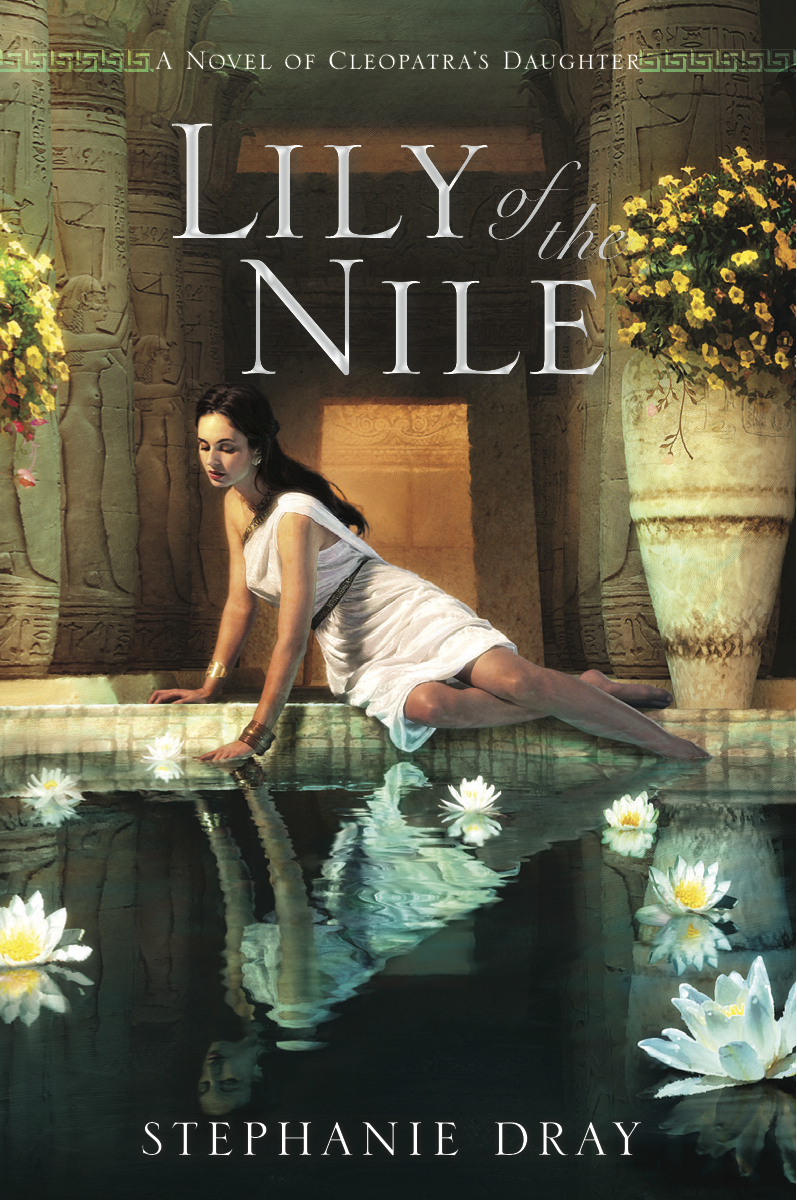
Historical Fiction Review: Lily of the Nile

Wow, Stephanie Dray! I settled down onto my couch with your debut release, Lily of the Nile, amongst the upheavel in Egypt that is happening right now... And WOW! You blew me away. I've been amazed, fascinated, humbled, and enthralled by Egyptian history since I was very young.  My grandparents took a trip there, and brought back a carved wooden elephant, which sits in my living room today. It is one of the places on my "Must Visit" list and whenever a documentary comes up on The History Channel, I record it/watch it, whatever I can... As I write this review, I can spy, the book, Cleopatra, by Michael Grant across from me on my bookshelf, a book that I read years ago... So needless, to say, I was a fan of the Ptolemy House and Egyptian culture for years, so a new novel about Cleopatra's daughter was especially exciting to me... And I was not disappointed.

Book Info...


With her parents dead, the daughter of Cleopatra and Mark Antony is left at the mercy of her Roman captors. Heir to one empire and prisoner of another, it falls to Princess Selene to save her brothers and reclaim what is rightfully hers…

In the aftermath of Alexandria’s tragic fall, Princess Selene is taken from Egypt, the only home she’s ever known. Along with her two surviving brothers, she’s put on display as a war trophy in Rome. Selene’s captors mock her royalty and drag her through the streets in chains, but on the brink of death, the children are spared as a favor to the emperor’s sister, who takes them to live as hostages in the so-called lamentable embassy of royal orphans…

Now trapped in a Roman court of intrigue that reviles her heritage and suspects her faith, Selene can’t hide the hieroglyphics that carve themselves into her flesh. Nor can she stop the emperor from using her for his own political ends. But faced with a new and ruthless Caesar who is obsessed with having a Cleopatra of his very own, Selene is determined honor her mother’s lost legacy. The magic of Egypt and Isis remain within her. But can she succeed where her mother failed? And what will it cost her in a political game where the only rule is win or die?

Berkley Trade January 2011
# ISBN-10: 0425238555

My Review...

First of all, the research in this book was more than evident. The author writes in 1st-person point-of-view, which is very difficult to begin with, but Dray does it in such a way that I was captured by Selene (the main character, daughter of Cleopatra).  She had a story to tell, and I was her avid listener. This girl, because she truly is a girl, from age 12-15 or so in the book, but for all that she is a girl, she is a queen. She has an extremely regal bearing, her speech is royal, she is smart, she is intelligent, she is religious, and yet she's at war with herself. I felt for her, I ached for her struggles, I understood her fears, her desires.

This book gave me chills... I had to remember to breath. The level of intensity, the power of magic and Isis, and the dramatic tension, the danger, all kept me on the edge of my seat.  I really enjoyed the way Dray conveyed the setting and the era. She did it so subtly--so as not to interupt the story at hand, yet at the same time it was strong enough that I could "see" everything in my mind, from the statues, the silk robes, the wool togas, the courtyards, the people, etc... The subtle use of language in this book also added to the flavor.

I would highly recommend this book for all historical fiction lovers, and if you weren't a historical fiction fan before, you might be when you read it!

Now for the warning... Ms. Dray left us with an intense cliffhanger!  I am literally haunting her website to find out when the next book will be available.  Here's the info... The next book in the series is Song of the Nile, and it will release in Autumn of this year!!! There is a gorgeous preliminary cover pic at Goodreads if you want to check it out.

Speaking of websites, Ms. Dray has tons of cool articles and fun stuff on there, worth a check: http://www.stephaniedray.com/

Until next time...
Eliza and Michelle


Wednesday, November 17, 2010

Guest Author, Stephanie Dray - Bad Girls of the Ancient World: Expanded Edition

Today on History Undressed, I'm thrilled to present to you a new author, Stephanie Dray.  I first met Stephanie earlier this year at a local writing chapter meeting.  I stared admiringly and somewhat covetously at the paper thin laptop she was using for an hour--mine is quite large--(my apologies to the speaker!) and then introduced myself. She is an up and coming author of historical fiction, her debut Lily of the Nile, a novel about Cleopatra's daughter, will release in January 2011.  In the meantime, she has presented me with a tantalizing and fun historical article.  Enjoy!

Bad Girls of the Ancient World: Expanded Edition
by Stephanie Dray
I recently co-authored a piece about bad girls in the ancient world with Jeannie Lin, author of historical fiction set in Tang Dynasty China. Together, Jeannie and I discussed how women who have been vilified in history share a few common traits whether they hail from western or eastern culture. These women were usually warriors, seductresses, or sorceresses. Sometimes, all three.

Today I’m taking on this subject solo to introduce you to the ancient bad girls of Western Civilization--those women who defied social convention and sometimes changed the world as a result. These women are fascinating and in the context of my forthcoming novel, Lily of the Nile, they also served to inspire my heroine, Cleopatra Selene.

The historic Selene was born into a dangerous political world, a civilization on the brink of change, and one that may have embraced a more egalitarian view of women if her parents had won their struggle with Octavian. Instead, the independence and power of Selene’s mother as a ruler became a pretext for war, and the misogyny of the Augustan Age took root.

It’s taken us more than two-thousand years to move away from the attitudes towards women that were fostered in Selene’s time, so let’s talk about those bad girls who inspire us and serve as everlasting examples of how ancient attitudes about women still influence us today.

Dido -- Queen of the Carthaginians

Dido
by Christophe Cochet
Though some have argued that Dido is only a mythological figure, it seems more likely that she was a real historical figure--a Princess of Tyre, granted the right to rule jointly with her brother. However, her brother wasn’t keen on sharing power so he murdered Dido’s wealthy husband with the intention of taking over the palace. What Dido did next set her apart from most other women of known history--she didn’t seek out shelter in another kingdom as a wealthy exile, nor did she try to re-marry a powerful king to help her recover the rulership of Tyre. Instead, Queen Dido led a group of settlers and government officials who remained loyal to her and founded the city of Carthage in North Africa.

She was a politician who not only shaped her own fate but created a new civilization. She was also, apparently, so highly religious that she is often equated with her goddess, the Carthaginian Tanit. And when she faced political domination by a neighboring country that wanted to force her into marriage, Dido stabbed herself to death and threw herself upon a funeral pyre.

But why did she come to be thought of as a bad girl in the ancient world?

Because the Romans and the Carthaginians would go on to battle each other in a series of wars for more than one hundred years, the Roman hostility towards a civilization founded by a powerful woman helped forge the Roman character and its attitude towards women. Virgil’s Aeneid, the quintessential propaganda epic of the Augustan Age, immortalizes Dido as a temptress who quite nearly dissuaded the upright Aeneas from his duty to found Rome. (Historically, it’s unlikely that Dido and Aeneas could have ever crossed paths, but a Roman historical fiction writer like Virgil couldn’t resist the temptation to imagine their failed love affair!)

For the Romans, Dido was a woman who should have submitted to her brother’s rule and never taken it upon herself to build a new city or refuse marriage to another man. And because the Romans defeated the Carthaginians, it’s their attitudes that we have inherited through history.

Sophonisba -- Carthaginian Princess and Patriot


Sophonisba
by Giovanni Francesco Caroto
  There are a number of stories about proud Carthaginian women who chose death as an alternative to being ruled by men, or by Rome. Sophonisba is another of them. The legend surrounding her is that she was a fiercely patriotic princess who was betrothed to Massinissa of Numidia. But when her intended groom allied with Rome and wouldn’t stay faithful to Carthage, she decided to marry the Numidian leader Syphax instead.

But Sophonisba’s jilted groom didn’t forget her. Perhaps as much from injured pride as for political reasons, Massinissa defeated Syphax and claimed Sophonisba as his bride. She married him, but tried to use his love for her to turn him against the Romans.

Sophonisba never took up arms against the Romans; she wasn’t a political enemy in the conventional sense. However, the Romans were threatened by women who used their sexuality for political gain. Marking her for an enemy, the Romans demanded that she be handed over and marched in a triumph through Rome as a captured slave. Sophonisba drank a cup of poison instead.

As a young North African queen and wife of Juba II who was himself a descendant of Massinissa, Selene must have heard this story; it’s difficult to imagine that it didn’t remind her of her own mother.

Olympias -- Mother of Alexander the Great

Olympias
from Promptuarii
Iconum Insigniorum
This Greek princess and supposed descendant of Achilles met her husband, Philip II of Macedon, while being initiated into the mysteries of an ancient cult. She was always suspected, ever after, of sorcery and congress with serpents. Though she was the fourth of Phillip’s wives, he claimed it was a love match, and she appears to have believed him until he started marrying other women. When Philip married a seventh time and drunkenly accused Olympias of infidelity, she packed up her things and left Macedon.

Fortuitously--and perhaps not coincidentally--her husband was assassinated shortly thereafter. Olympias was able to install her son Alexander on the throne and he would go on to become ruler of the known world. But Olympias didn’t simply fade into the woodwork; she was an active participant in Alexander’s political regime. After her son’s death, though she was in her fifties, Olympias commanded an army in the field to preserve the throne for her baby grandson. What’s more, she won. For a short time, she was the mistress of Macedonia, at the zenith of her power. Eventually, she was defeated by Cassander and executed, thought to be far too dangerous to leave alive, but she leaves behind the archetype of a fiercely protective mother.
As a descendant of Alexander’s Macedonian general, Ptolemy, Selene was a kinswoman to Olympias and probably learned about her exploits.

Cleopatra -- The Most Powerful Woman in the History of the World

Marble Bust of Cleopatra
Dating from 30-40 BC
As the consort of not one, but two Roman generals, Cleopatra earned a reputation as a seductress. Though she was a Hellenistic Queen, the Romans thought of her as foreign and exotic. Because she respected older Egyptian traditions, the Romans disdained her for worshipping all manner of strange gods. What’s more, her enemies believed she was capable of wielding magic. And if that weren’t bad enough, Cleopatra was also a warrior queen, capable of commanding her own warships.

She’s come down to us as a familiar and iconic image. Everyone has heard about the infamous Queen of the Nile, and there’s a good reason for it. She was, and remains, the most powerful woman in the history of the world. Though we’ve since had powerful queens, the geographic scope of their authority has been smaller. We’ve also had women serve as prime ministers of important countries, but their powers have been limited and sharply circumscribed. Cleopatra was not only the queen of Egypt in her own right, but in concert with her Roman husband, the biddable Marcus Antonius, she wielded unprecedented power. Until the Battle of Actium, she was poised to rule the entire world. But for some bad weather and a wildly successful propaganda campaign against her, the world might be a much different place today.

It’s difficult to wonder what lessons Cleopatra’s daughter Selene must have taken from her rise and fall. Selene herself was born in Ptolemaic Egypt, the best possible place to be born a woman in the ancient world. Raised in Alexandria, she would never have lacked for strong female role models.

Nonetheless, Cleopatra Selene was not a bad girl of history; she managed, somehow, to wield great political power and religious influence without ever falling afoul of the patriarchy. This may be because no sexual scandal touched her during her twenty-year marriage to Juba II or because she never took up arms on a battlefield.

Even so, she never forgot the important women in her life or in her legacy and neither should we.

*****


With her parents dead, the daughter of Cleopatra and Mark Antony is left at the mercy of her Roman captors. Heir to one empire and prisoner of another, it falls to Princess Selene to save her brothers and reclaim what is rightfully hers…


In the aftermath of Alexandria’s tragic fall, Princess Selene is taken from Egypt, the only home she’s ever known. Along with her two surviving brothers, she’s put on display as a war trophy in Rome. Selene’s captors mock her royalty and drag her through the streets in chains, but on the brink of death, the children are spared as a favor to the emperor’s sister, who takes them to live as hostages in the so-called lamentable embassy of royal orphans.

Now trapped in a Roman court of intrigue that reviles her heritage and suspects her faith, Selene can’t hide the hieroglyphics that carve themselves into her flesh. Nor can she stop the emperor from using her for his own political ends. But faced with a new and ruthless Caesar who is obsessed with having a Cleopatra of his very own, Selene is determined honor her mother’s lost legacy. The magic of Egypt and Isis remain within her. But can she succeed where her mother failed? And what will it cost her in a political game where the only rule is win or die?

*****

Stephanie graduated from Smith, a small women’s college in Massachusetts where–to the consternation of her devoted professors–she was unable to master Latin. However, her focus on Middle Eastern Studies gave her a deeper understanding of the consequences of Egypt’s ancient clash with Rome, both in terms of the still-extant tensions between East and West as well as the worldwide decline of female-oriented religion.


Before she wrote novels, Stephanie was a lawyer, a game designer, and a teacher. Now she uses the transformative power of magic realism to illuminate the stories of women in history and inspire the young women of today. She remains fascinated by all things Roman or Egyptian and has–to the consternation of her devoted husband–collected a house full of cats and ancient artifacts.  Visit Stephanie at http://www.stephaniedray.com/