On this day in history, Susan B. Anthony was arrested for voting in the presidential election in 1872 and fined $100. Her actions as a prominent civil rights activist paved the way for women today. THANK YOU, Susan B. Anthony!
A short video...
Tuesday, November 5, 2013


Monday, November 4, 2013
A Brief History of the Winter Palace by Ally Broadfield
Welcome to History Undressed, guest blogger, Ally Broadfield! She's written a fabulous piece for us today on The Winter Palace. Enjoy!
A Brief History of the Winter Palace
by Ally Broadfield
 |
| The Winter Palace from the Neva River |
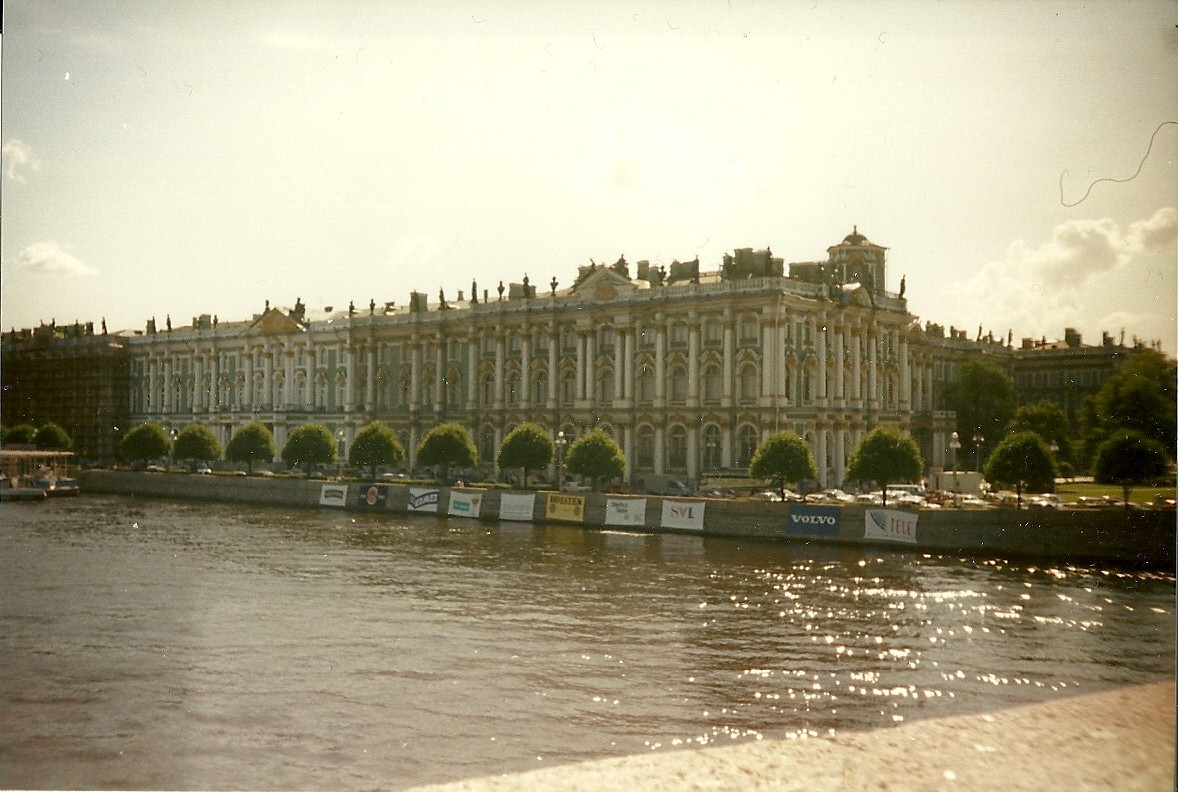
Magnificently situated on the bank of the Neva
River, the Baroque-style Winter Palace not only served as the main residence of
the Russian Tsars, but it has also played a central role in the political and
cultural history of St. Petersburg. Today the Winter Palace is known as the
main building of the Hermitage Museum. The palace has 1,786 doors, 1,945
windows and 1,057 opulently decorated halls and rooms.
The first Imperial residence on the site of the
Winter Palace was a Dutch-style wooden house build for Peter the Great in 1708.
In 1711, a stone building replaced the wooden house. The remains of the stone
building formed the foundations of the Hermitage Theatre, but parts of it have
been restored and are now open to the public. In 1731, Empress Anna Ioannovna
commissioned court architect Francesco Bartolomeo Rastrelli to create a new,
larger palace on the same site. Completed in 1735, the third Winter Palace
survived for only seventeen years before Empress Elizabeth asked Rastrelli to
expand the building. After two years of planning, the empress and Rastrelli
agreed to a new design that would completely rebuild the palace.
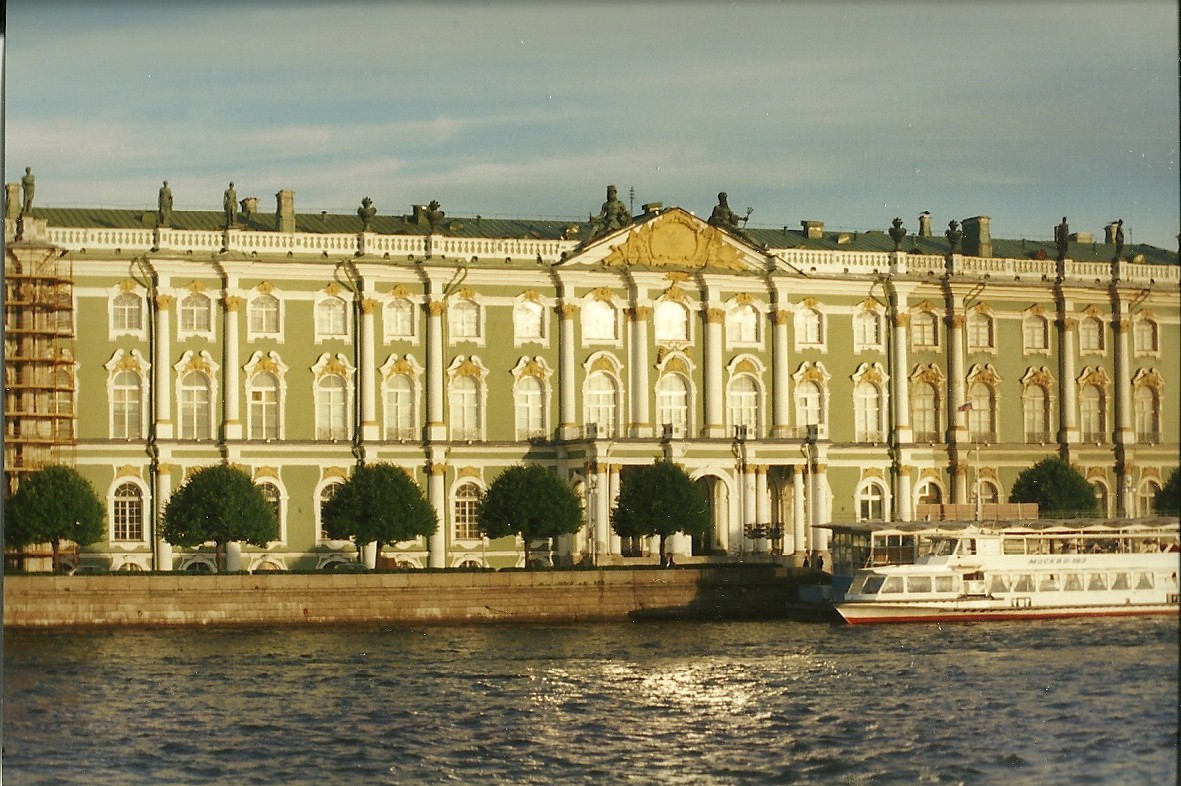
 |
| A closer view from a boat on the Neva River |
When Catherine the Great took the throne in 1762,
the Winter Palace was nearly complete. Though Catherine removed Rastrelli from
the project, his designs for the exterior of the palace have remained almost
completely unaltered to this day. The building forms a square with an interior
courtyard accessed through three archways facing palace square. The lavishly
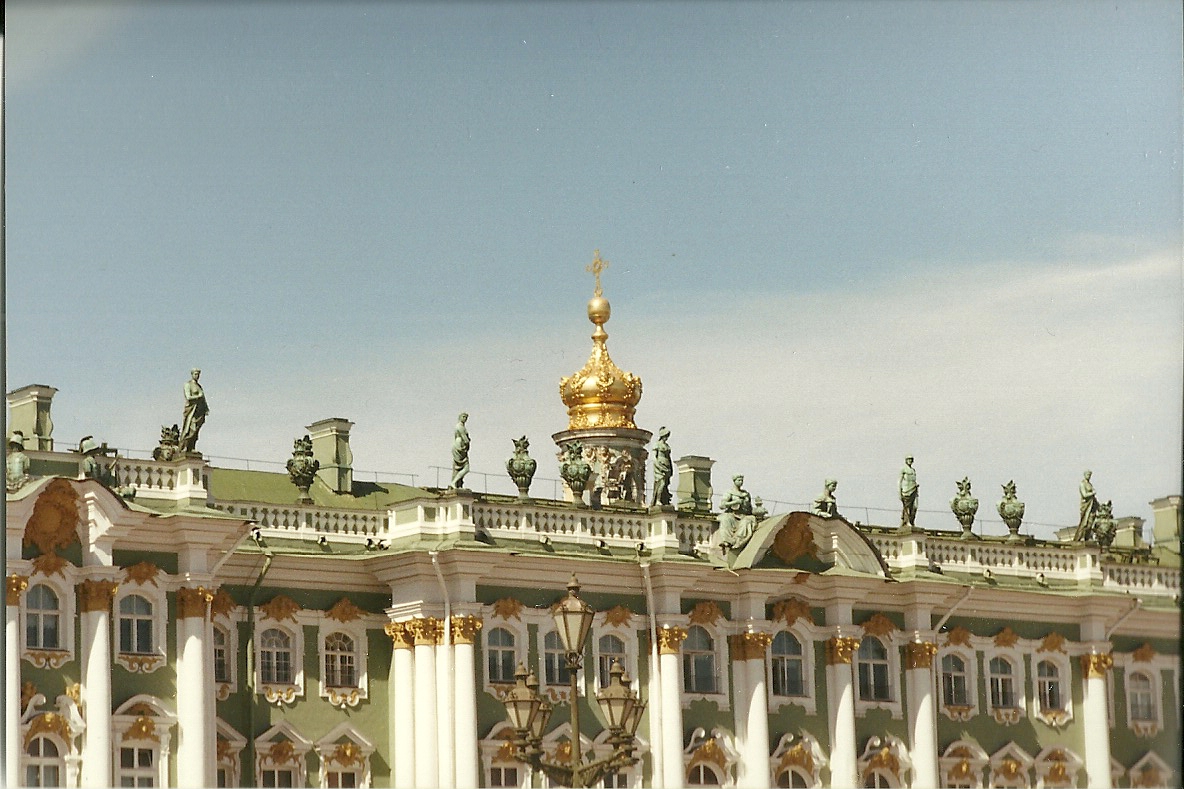
decorated facades feature two levels of ionic columns, and the parapets of the
building are decorated with statues and vases. Local regulations prevent any
building in the city center from exceeding the palace’s approximately 72 foot
height.
 |
| The statues and vases decorating the parapets. |
Throughout the eighteenth and nineteenth centuries,
continual improvements were made to the interior of the palace. In December 1837,
a fire destroyed nearly all of the palace’s interior. Nicholas I ordered that
the reconstruction of the palace be completed within one year, a monumental
task given the technology of the time.
Alexander II was the last of the Tsars to use the
Winter Palace as his primary residence. After his assassination in 1881, it
became apparent that the palace was too large to be properly secured to ensure
the safety of its occupants. The Winter Palace was still utilized for
official ceremonies and receptions. A masked ball commemorating the reign of
Tsar Alexey Mikhailovich (the second Romanov Tsar) held in 1903 was the last
major event hosted by the Imperial family at the Winter Palace.
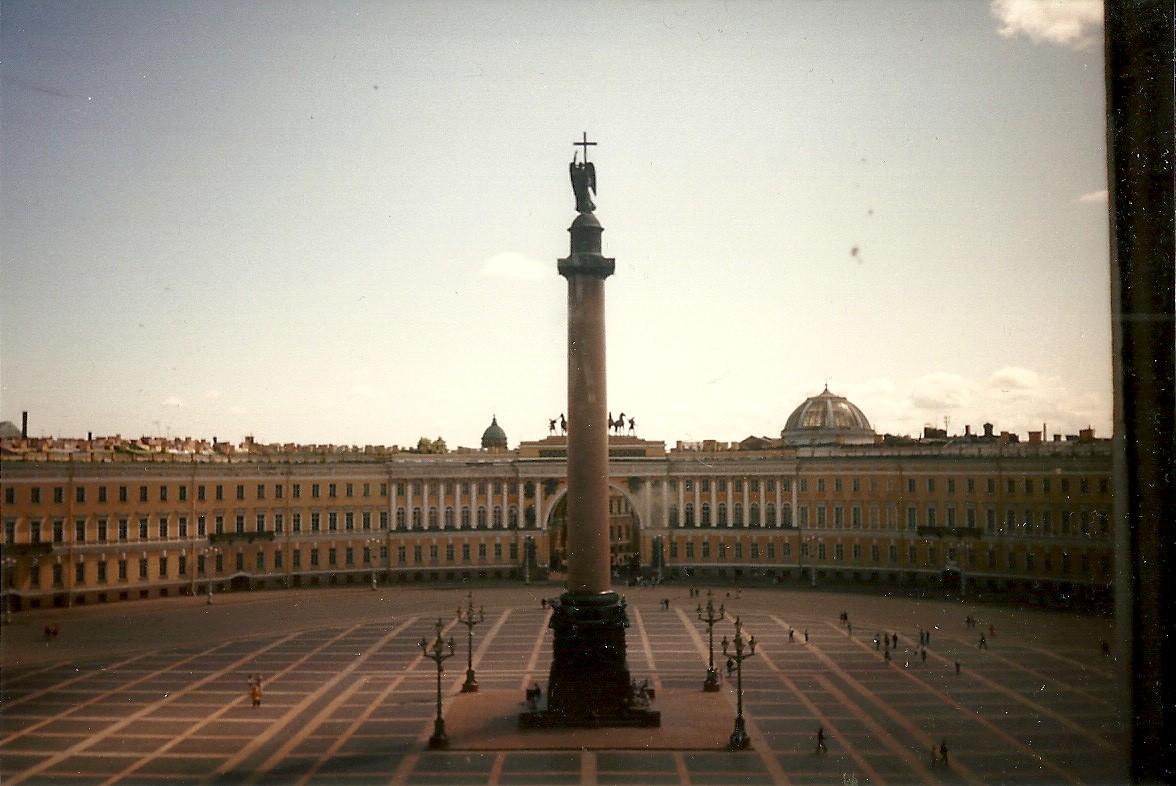
 |
| Palace Square from inside the Winter Palace (including the General Staff Building and the Alexander Column commemorating victory over Napoleon). |
In 1917, after Nicholas II’s abdication, the Winter
Palace became the seat of the Provisional Government under Alexander Krenskiy,
and it was against this authority (rather than the Imperial family) that the
Bolsheviks stormed the palace. The Winter Palace was declared part of the
State Hermitage Museum on October 17, 1917. Though the Bolsheviks originally
instituted a policy to remove all Imperial symbols from the palace, after the
siege of Leningrad during World War II, an ongoing process of returning the
palace to its Imperial splendor began. The state rooms of the Winter Palace now
form one of the most popular sections of the Hermitage.

 |
| The interior of the state rooms of the Winter Palace. |
For more information, much better pictures than I
took, and even a virtual tour, visit the official website of the Hermitage Museum.
There is a special section on the Winter
Palace Through the Ages.
BIBLIOGRAPHY
Norman, Geraldine. The Hermitage: The Biography
of a Great Museum. New York: Fromm International, 1998.
Ally
Broadfield lives in Texas and is convinced her house is shrinking, possibly
because she shares it with three kids, five dogs, two cats, a rabbit, and
several reptiles. Oh, and her husband. She likes to curse in Russian and
spends most of her spare time letting dogs in and out of the house and shuttling
kids around. She writes historical romance and middle grade/young adult
fantasy. Her debut release, Just a Kiss,
is coming from Entangled Publishing in December 2013.
You can find Ally on her website,
Facebook,
and Twitter
(though she makes no claims of using any of them properly).
Friday, November 1, 2013
THE SAD STORY OF EDABELLA by Colin Falconer

THE SAD STORY OF EDABELLA
by Colin Falconer
They are the original glamour supercouple;
everyone thinks they are just perfect for each other. He is lean, good-looking,
powerful and famous; she is beautiful, elegant and young. These days we would
give them one of those cutesy names like Brangella or Bennifer.
Edabella.
But here is the real situation: he has
married her because it is expected of him. He needs a wife to shore up his
public image and sons to take over the family business. And so he hides his
true sexual orientation from her, at least initially.
Here is her situation: she has married him
because he is appears a good match and his prospects appear excellent. There
was, it is true, quite a bit of pressure from her father, who is accustomed to
getting his own way with everyone.
After they are married she finds herself
starved of affection, and thinks initially that it is her fault. The fact that
her husband may not be straight has, as yet, not occurred to her. She has
nothing to compare him to.
But she bears his children and over the
years they become quite good friends. But something is missing from their
marriage, as she becomes acutely aware.
Now am I describing a situation from which
period in human history? If you said: ‘my friend just last week,’ you could be
correct. I know one relationship counsellor who tells me that one in every three men that she counsels
is ‘on the downlow;’ that is, they are married but don’t want to be - at least,
not with a woman. Some are having an affair, or are actively promiscuous, with
other men.
But what drew me to write about Isabella
and Edward was not only the poignancy of their story - but its sheer
timelessness.
What is here, behind the pageantry and the
wars, played out in the palaces of Westminster, the lonely abbeys of
Northumberland and the battlefields of Scotland, was a tragedy that still takes
place every day in this 21st century, though it is rarely openly discussed.
The main difference is that when such a
marriage of convenience comes to its sorry conclusion today, it does not bring
down the King of England or result in private assassination.
Many historians seem to me to have weighed this
tragic story through a prism, searching for a hero and a villain in it -
calling Isabella a she-wolf, or labelling Edward a hopeless dandy. But what if there
were no villains, except perhaps the same two ageless villains who still wreak
havoc today - silence and shame.
It is what I love most about history the
fiction that comes from it; it is not about stories that happened long ago with
no relevance today. I love it because history has so much to tell us about the
conflicts that dog our society, even centuries later.
Edabella were so much people of their time;
yet they are so much of our time as well.
ISABELLA,
Braveheart of France.

She was taught to obey. Now she has learned to
rebel.
12 year old Isabella, a French princess marries
the King of England - only to discover he has a terrible secret. Ten long years
later she is in utter despair - does she submit to a lifetime of solitude and a
spiritual death - or seize her destiny and take the throne of England for
herself?
Isabella is just twelve years old when she
marries Edward II of England. For the young princess it is love at first sight
- but Edward has a terrible secret that threatens to tear their marriage - and
England apart.
Who is Piers Gaveston - and why is his presence
in the king’s court about to plunge England into civil war?
The young queen believes in the love songs of
the troubadours and her own exalted destiny - but she finds reality very
different. As she grows to a woman in the deadly maelstrom of Edward’s court,
she must decide between her husband, her children, even her life - and one
breath-taking gamble that will change the course of history.
This is the story of Isabella, the only woman
ever to invade England - and win.
In the tradition of Philippa Gregory and
Elizabeth Chadwick, ISABELLA is thoroughly researched and fast paced, the
little known story of the one invasion the English never talk about.
READ IT!
Trailer link:
http://www.youtube.com/watch?v=lGBgmrsZLMA
Colin Falconer is the author of over twenty
historical novels. See his blog page to see more posts about history
and historical fiction.
Thursday, October 31, 2013
Happy Halloween! (A short historical video)
We hope you all have a safe and entertaining Halloween!!
Want to know a bit of history on Halloween and how trick or treating came about? Enjoy this short video from National Geographic :)
Want to know a bit of history on Halloween and how trick or treating came about? Enjoy this short video from National Geographic :)
Wednesday, October 30, 2013
Castle of the Week: Bran Castle in Transylvania
 Welcome to another rousing addition of Castle of the Week! In honor of our week of spooky posts, I bring you Bran Castle in Romania--commonly referred to as Dracula's Castle...
The castle is located on the border of Transylvania and Wallachia. The first fortress dates back to 1211, built by the Teutonic Knights, but they were driven away by 1226. In 1377, Hungarian King Louis the Great (Louis I of Anjou), approved the construction of Bran Castle, and the building was completed by 1388. The castle was occupied by a lord whom the king appointed in order to protect the area and borders.
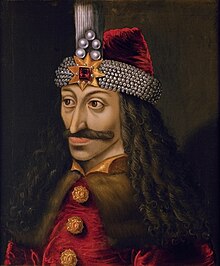
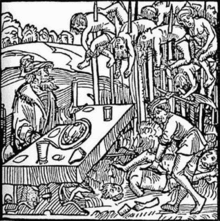
The castle was leased to the Princes of Transylvania (Saxons of Brasov) from King Vladislav II Jagello, for a couple hundred years, and then was sold in 1651. By 1920, the castle became the royal residence for within the Kingdom of Romania. Today the castle is owned by its legal heirs.
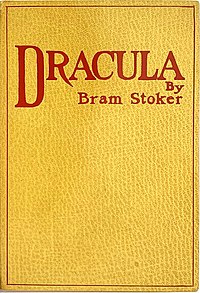 The book, Dracula, by Bram Stoker, was published in 1892, and based off of myths and folklore, and in particular vampires and Transylvania. It was not the first vampire book published, but certainly the most popular. The name Dracula stems from Vlad the Impaler's father's name, Darcul, which he took after being inducted into the Order of the Dragon. Dracul, meant The Dragon, but more specifically today, it means The Devil.
I would LOVE to visit this castle one day! Here are some pics...
 |
| Bran Castle |
 |
| Looking up at Bran Castle |
 |
| A cross in the gardens. |
 |
| A view from the inside of the castle looking down onto the village. |
 |
| A secret passageway in the castle. |
Tuesday, October 29, 2013
Video of the Week: Vlad the Impaler
Since this is the week of All Hallow's Eve (aka Halloween), I wanted to continue with spooky videos. Having just watched the season premiere of the new show Dracula on NBC, I thought it fitting to give you the "real" Dracula. Here is part 1 of 5 videos for the documentary, Vlad the Impaler. Enjoy!
Monday, October 28, 2013
The Tower of London by Mary Gillgannon
Please join me in welcoming today's guest blogger, Mary Gillgannon. She's written a fabulous piece on The Tower of London. Enjoy!


The Tower of London
by Mary Gillgannon
Most people are familiar with the Tower of London England ,
William wanted to be sure he could defend London
from the Saxons, who were seeking to oust him from their country.

It was originally a motte and
bailey castle, which is a defensive tower or keep built on a large earthen mound, the motte, and surrounded by a bailey,
a flat raised area where buildings to maintain the troops were constructed. The
whole complex was surrounded by defensive walls and a ditch. The first keep William
built on the site was of wood. He later replaced it with a stone keep in 1078,
which was called the White
Tower
I mention William’s plans for the
fortress in my book The Conqueror,
when my hero and heroine visit London .
The hero, Jobert de Brevrienne, is a knight in William’s army, while my
heroine, Edeva, is the daughter of the Saxon eorle whose lands have been given
to Jobert by William. The struggle between the Norman French invaders and Saxon
natives forms the background for the book.
Over the years, William’s royal
descendants continued to make improvements to the Tower of London
When I was researching the era of
Henry III for my book The Leopard, I
discovered that the Tower had another use that is seldom mentioned in history. Frederick
III, the Holy Roman Emperor, gave Henry three leopards, in honor of the three
beasts displayed on the royal banner, and these animals were kept at the Tower.
Henry later added a white bear,
presumably a polar bear, which was occasionally allowed to fish in the Thames (What
a sight that must have been!) and an elephant, for which a separate building
was constructed.
The menagerie did not end with
Henry’s reign. Animals were housed at the Tower for the next 600 years. Some of
the species included in the menagerie were monkeys, ostriches, lions, tigers,
wolves, a boa constrictor, grizzly bear, zebras and baboons.
In many cases, the caretakers of
these animals had no idea what to feed them or how to maintain them and many of
the poor creatures did not survive very long. The conditions they lived in would
appall us today, and they undoubtedly distressed compassionate individuals even
back then. Indeed, in The Leopard, my
hero, acclaimed knight Richard Reivers (known as the Black Leopard), takes the
heroine, Astra, to visit the menagerie, and tender-hearted Astra is very
distressed by the cramped, unpleasant living conditions the leopards must
endure. Her reaction to the animals’ distress makes Richard realize how
different she is from all the other women he has known, and he begins to fall
in love with tender-hearted, idealistic Astra.

Starting in the late middle ages
until the 1800’s, the Tower housed some of the most famous prisoners in English
history, including Anne Boleyn, Sir Walter Raleigh, and Elizabeth I, who was
held in the Tower for eight weeks by her sister Mary during Mary’s brief reign.
(She died before she could execute Elizabeth ,
or English history might be very different.) Today the Tower is a popular
tourist site, and the Crown Jewels are still on display there, as they have
been since 1669. In another note on the Tower’s connection to animals, even
today six ravens are kept at the Tower at all times, due to the legend that if
they are absent, the kingdom will fall.

Mary Gillgannon writes romance novels set in the dark ages,
medieval and English Regency time periods and fantasy and historical novels
with Celtic influences. Her books have been published in Russia, China,
the Netherlands and Germany. Raised in the Midwest, she now
lives in Wyoming and works at public library. She is married and
has two grown children. When not working or writing she enjoys gardening,
traveling and reading, of course!
Website: http://marygillgannon.com
Facebook: https://www.facebook.com/mary.gillgannon
Twitter: https://twitter.com/MaryGillgannon
Subscribe to:
Posts (Atom)